We had a good sleep at our free spot near the road bridge in Wroclaw.
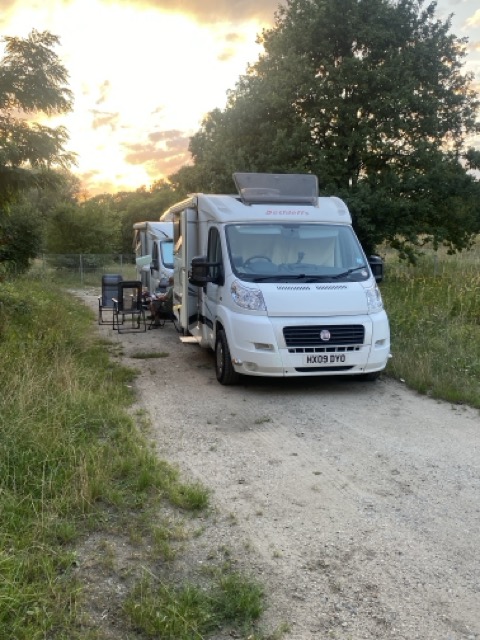
After 9am we drove back and parked outside the campsite and had a coffee at the on-site cafe. We got checked in and after our coffee the pitches were free to drive into.
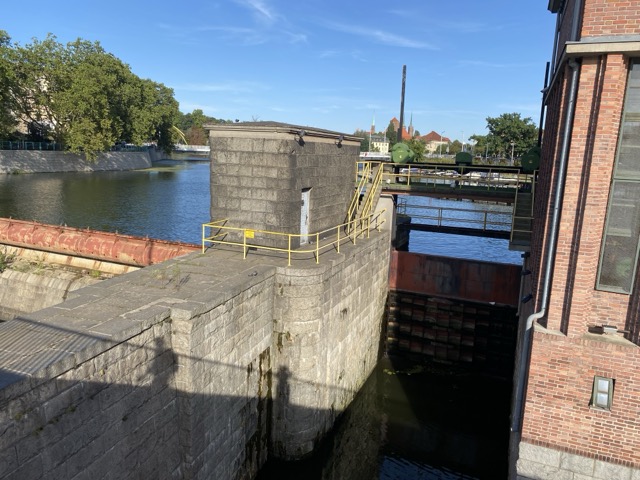
We are right on the water but the view is partly hidden by reeds. The only downside is that there are 2 railway lines on bridges overhead where trains come over making a racket occasionally.
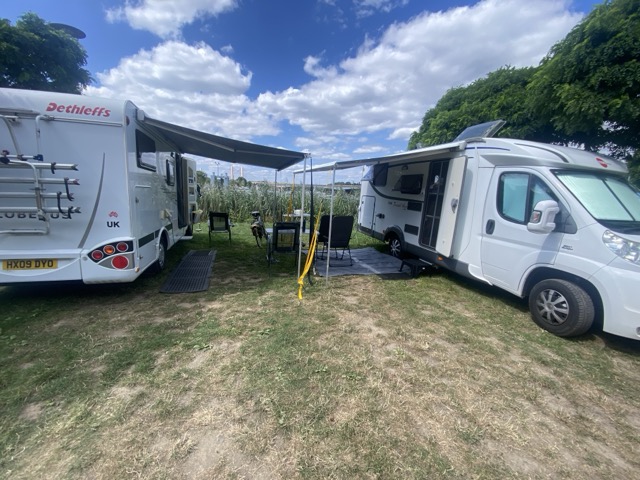
Lisa and I wanted to catch up on our blog and journal. The boys were given the task to cycle to the launderette and get the washing done.
After 1.5 hours they returned and we hung up the washing and finished getting our blogs up to date.
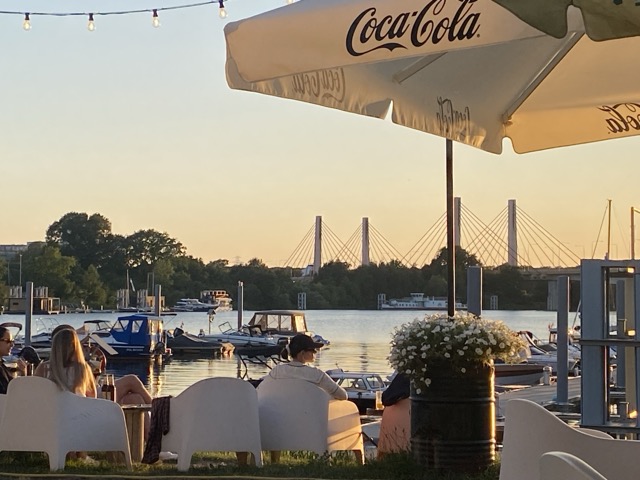
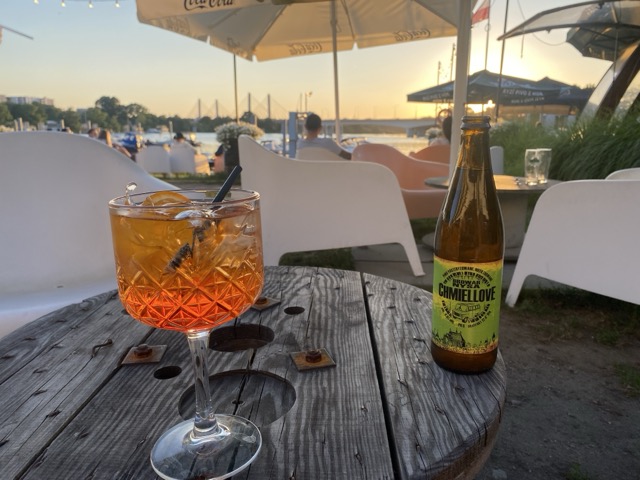
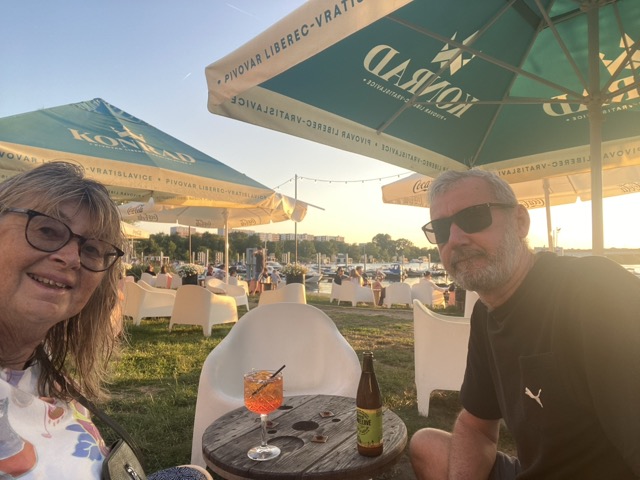
We then went for drinks at the bar on-site with views of the water. It was very relaxing.
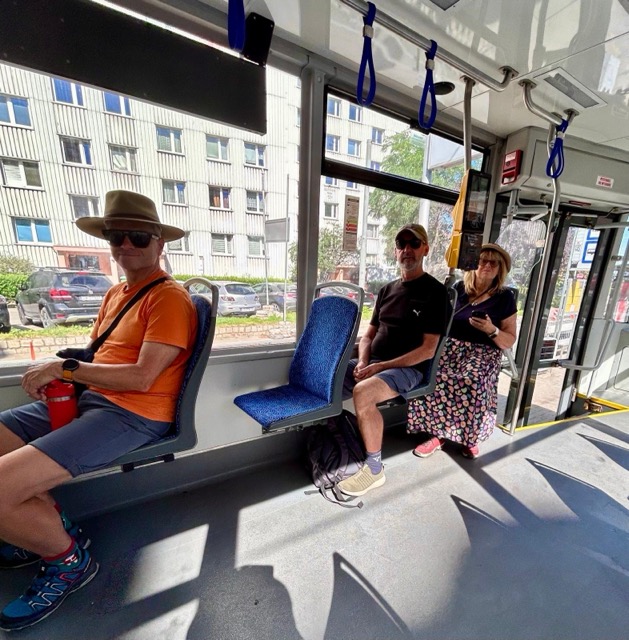
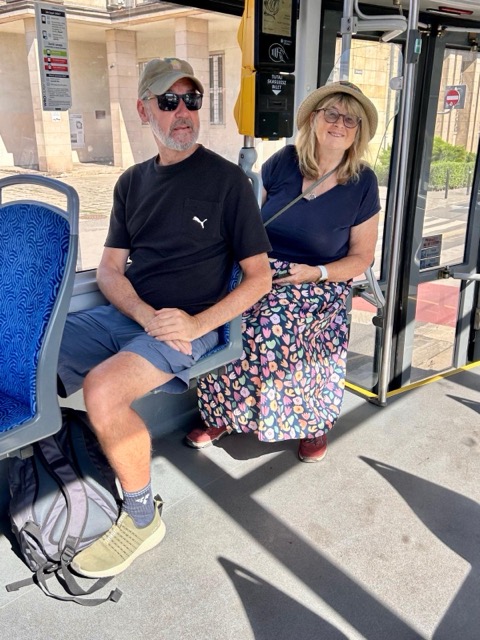
Next day we left at a reasonable time to get the tram into town.
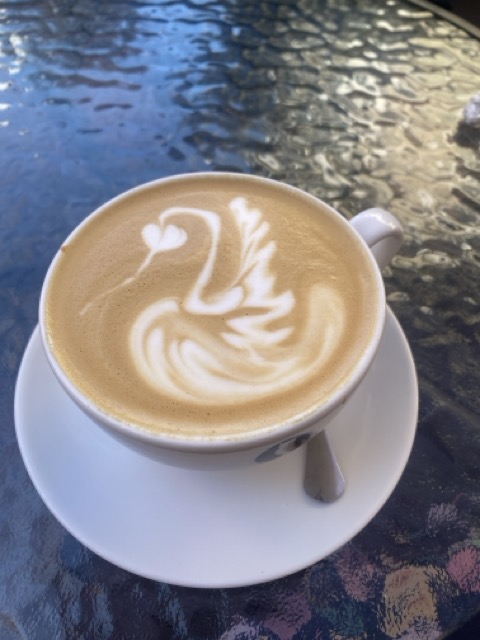
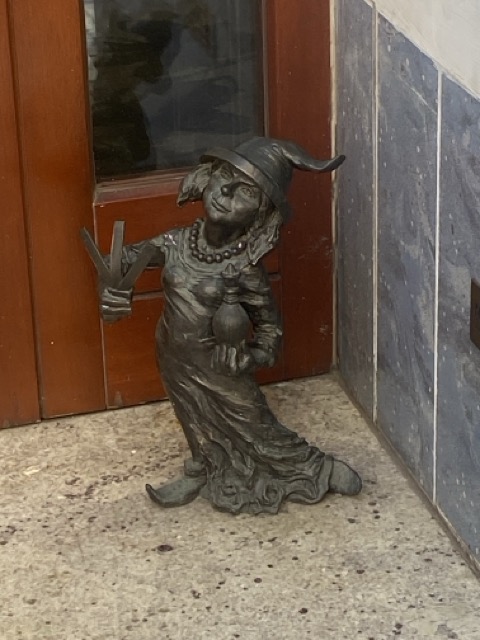
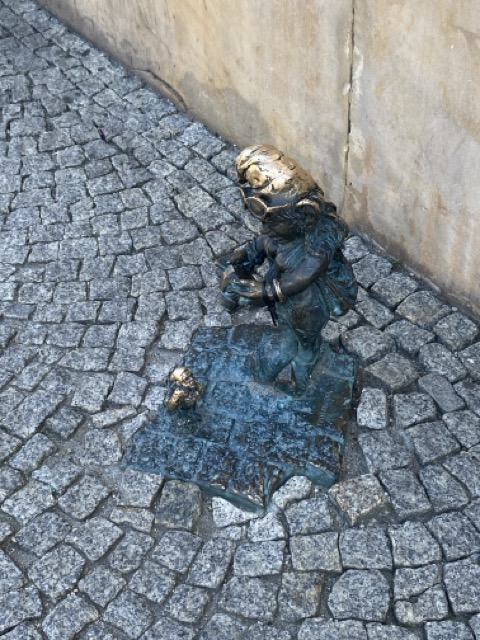
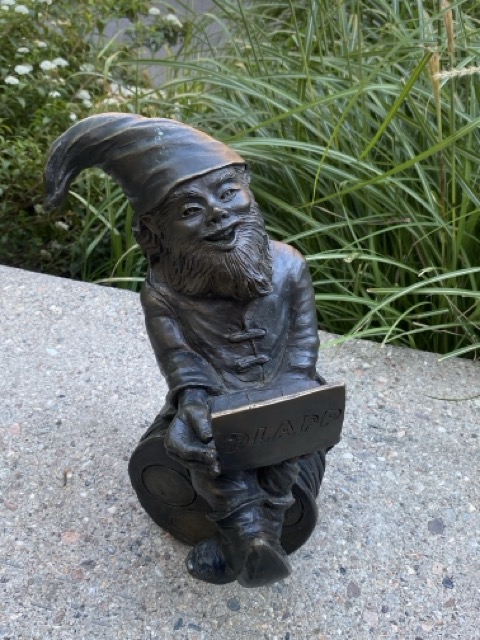
The old town looked lovely but the first stop was a good coffee at a coffee roaster. We enjoyed a reasonable flat white with good decorations. We saw our first gnome here.
There are apparently over 800 in Wroclaw. They started as a nod to the anti-communist Orange Alternative movement of the 1980s, and now form a massive city-wide scavenger hunt.
In the 1980s, activists painted little orange gnomes on walls to mock the communist regime peacefully. The city placed the first official bronze dwarfs in 2001 on Świdnicka Street to honor that protest history.
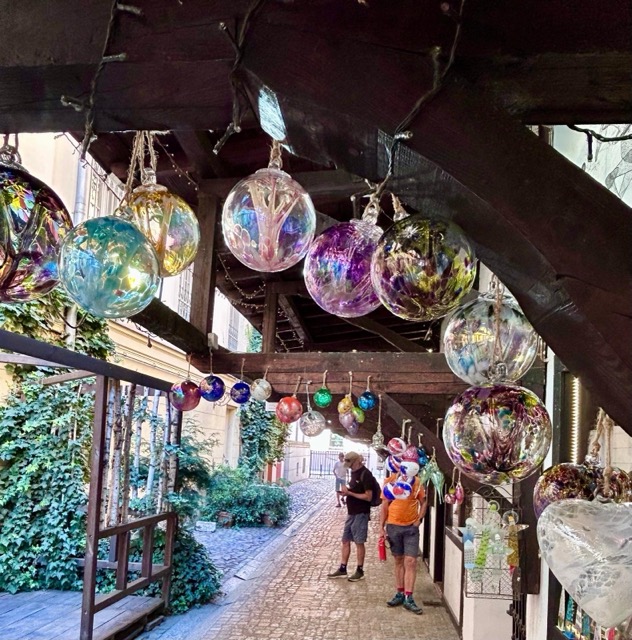
Opposite we found an old Butchers Lane which is now full of art and craft shops.
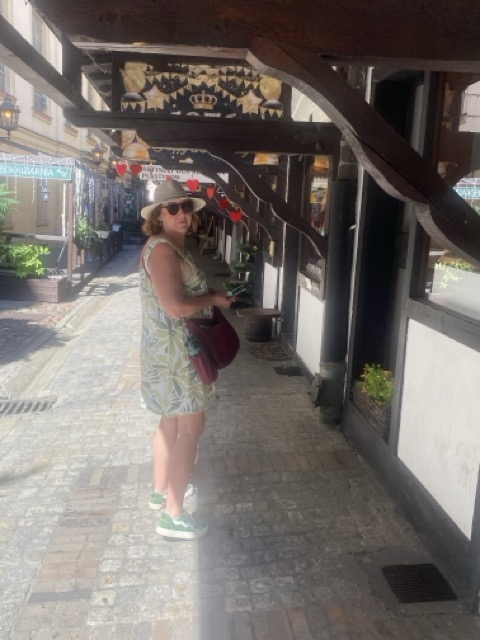
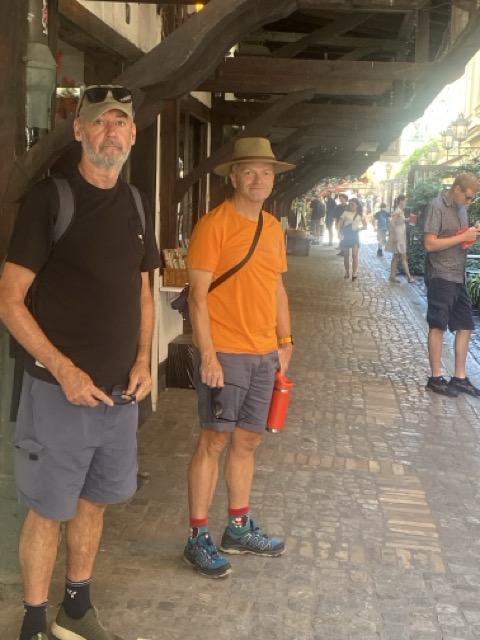
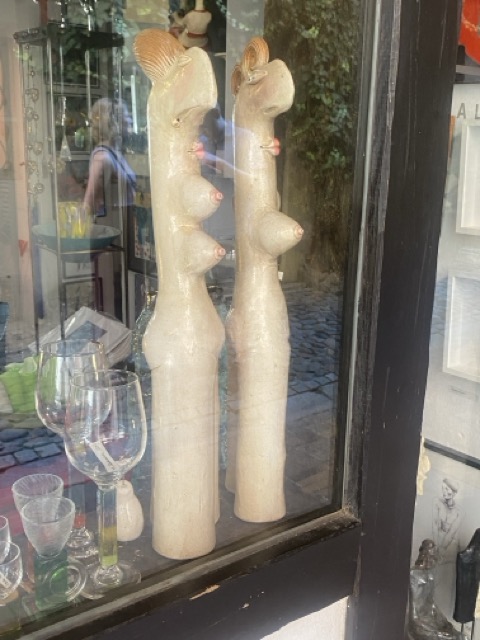
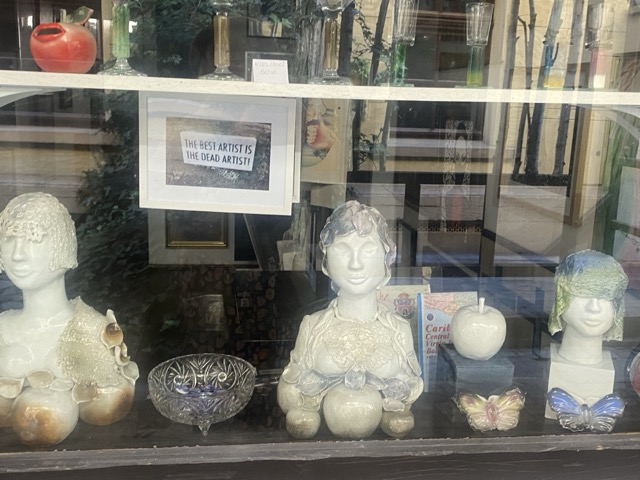
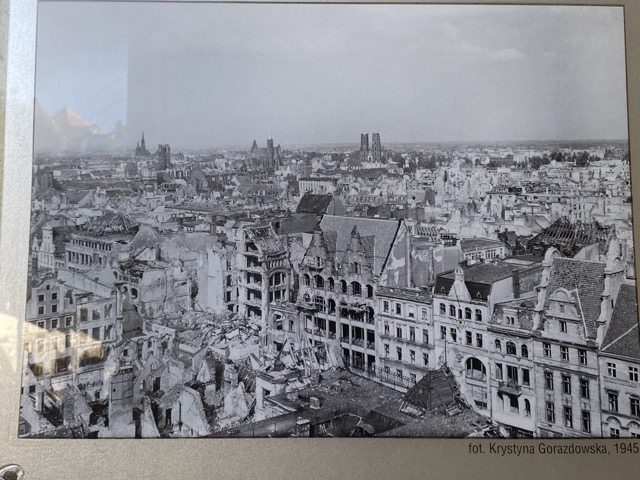
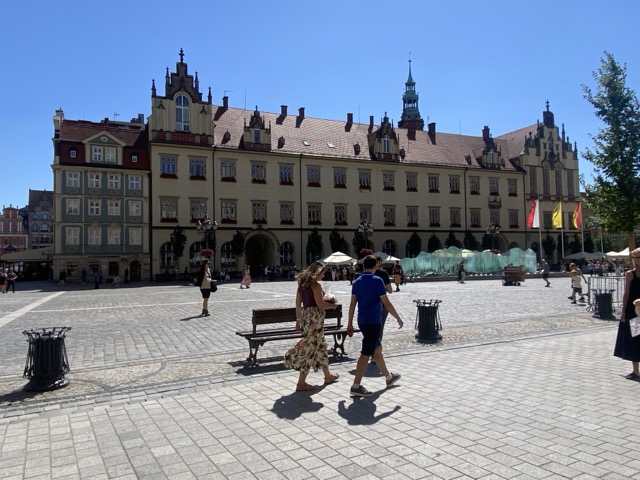
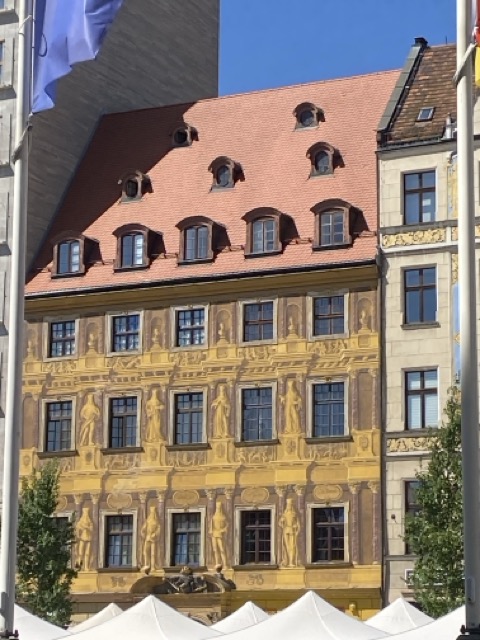
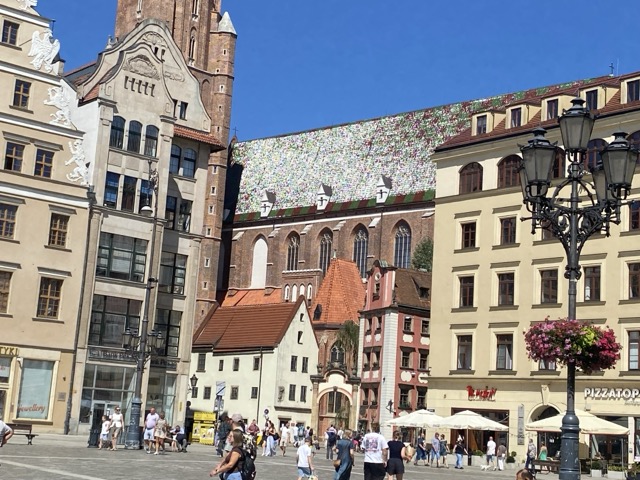
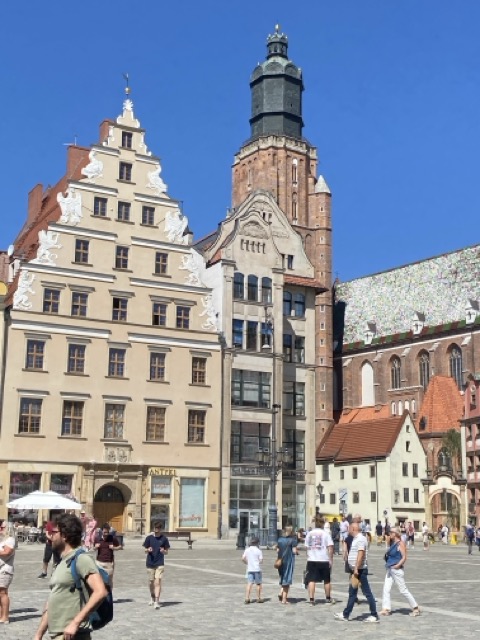
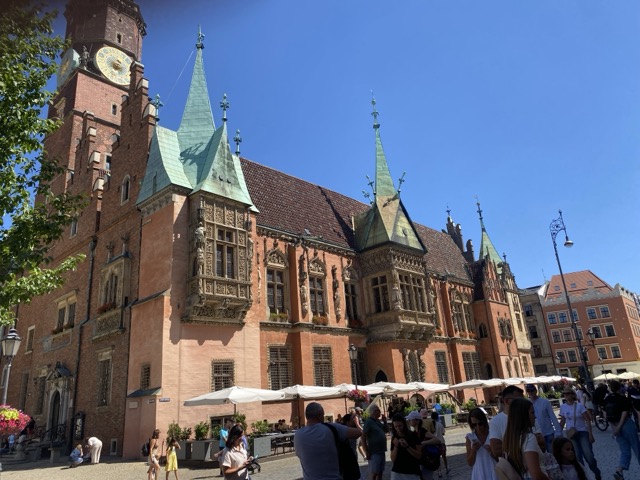
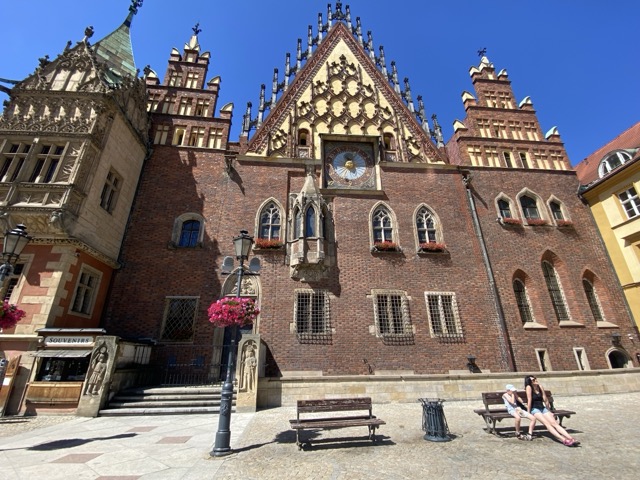
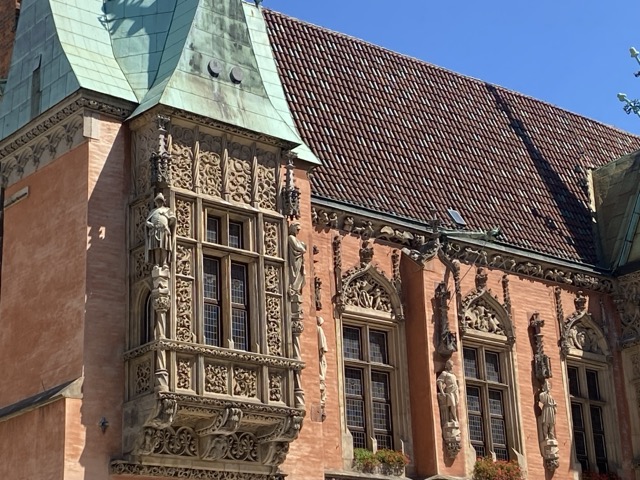
We then went the short distance to the centre of Wroclaw – Market square. The buildings are medieval but a lot rebuilt after WWII.
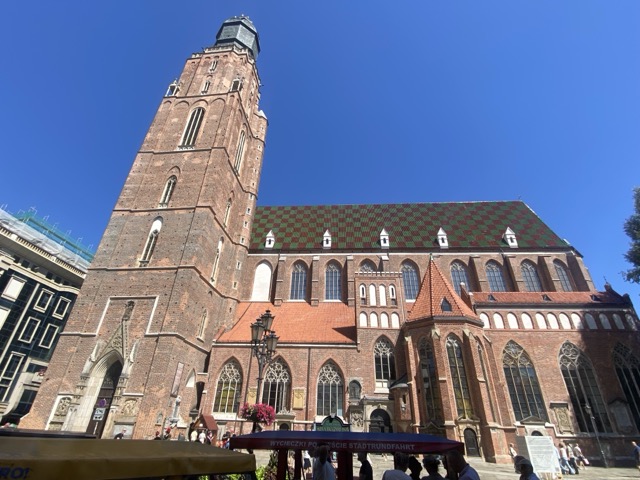
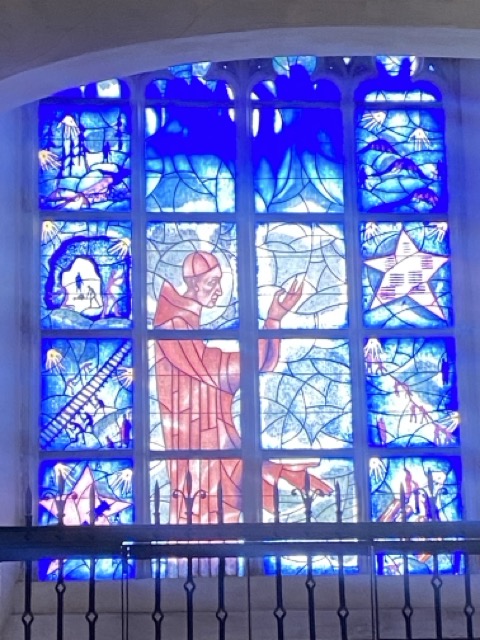
We went into St Elizabeth’s church – the St Elizabeth from Wartburg castle where we had been a few days ago. The windows were modern and very impressive.
We knew the story that her husband didn’t like her giving bread to the poor. So when he saw her when she was distributing the bread, it had all turned into rose petals – as in the main window.
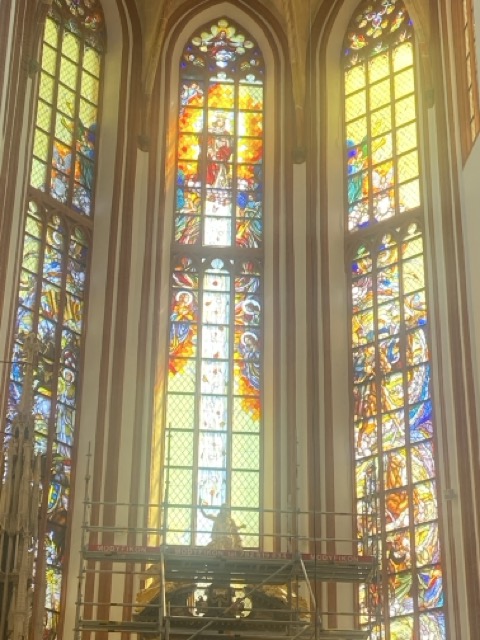
This striking chapel marked the 75th anniversary of the foundation of the Polish Underground State. September 28, 2014 the Chapel with the Mausoleum of the Memory of the Polish Underground State was open to the public. The windows are designed by multidisciplinary artist – Jerzy Kalina, which is the author of many iconic sculptures, stained glass, scenography, films, installations in Poland.
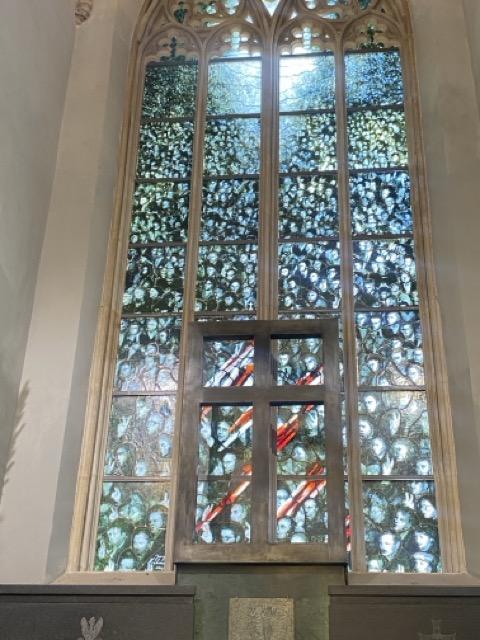
This window marked the Siberian work camps many Poles were sent to.
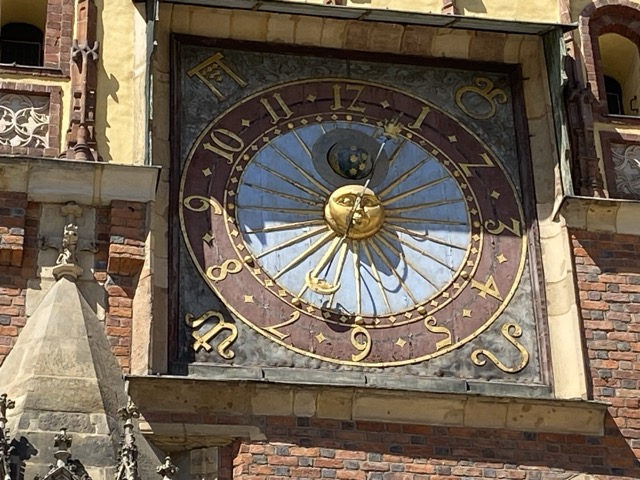
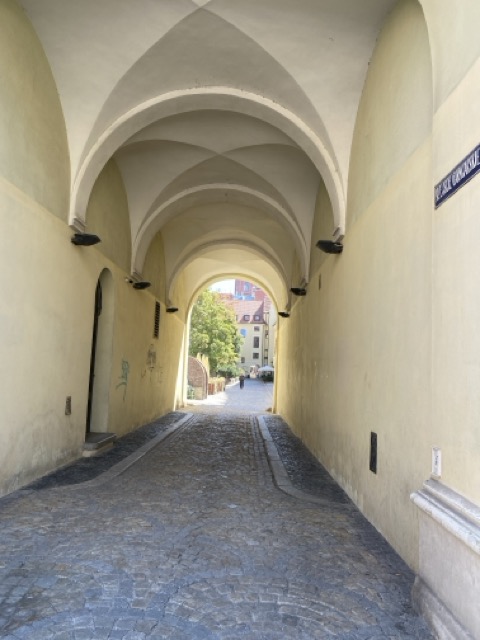
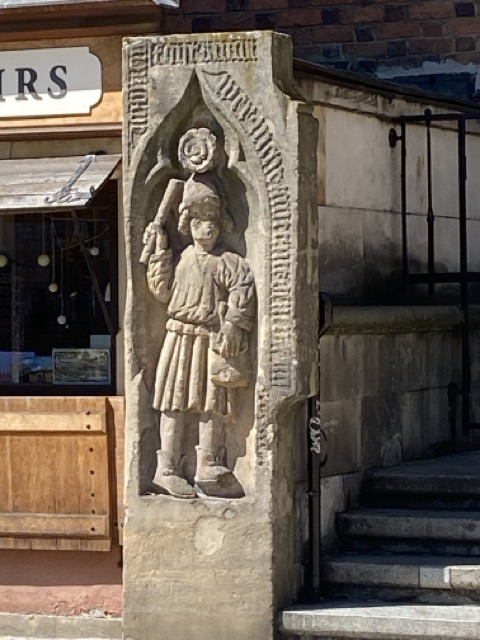
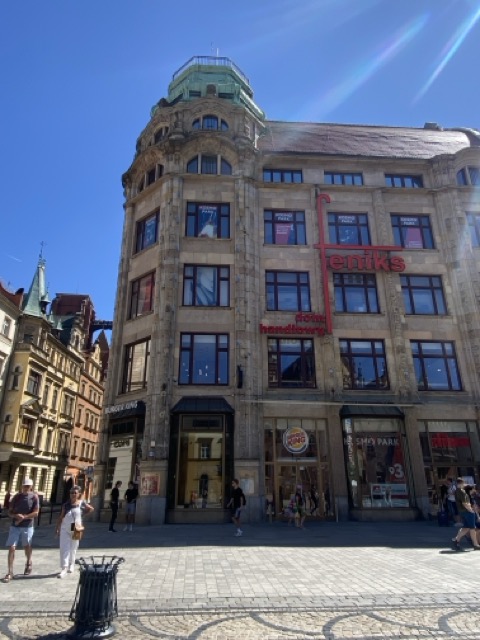
We walked through the market square seeing many impressive buildings.
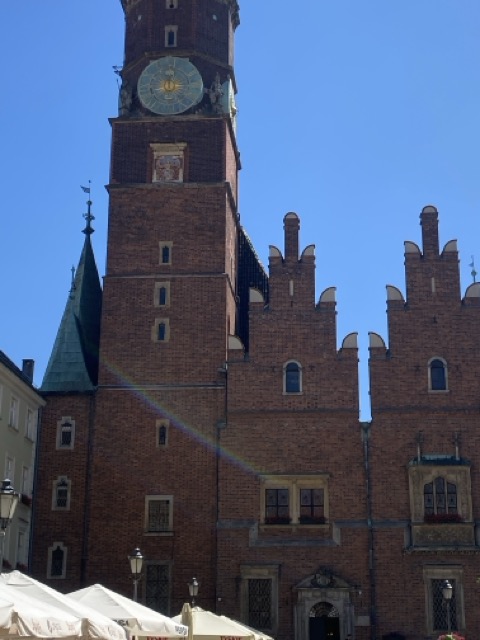
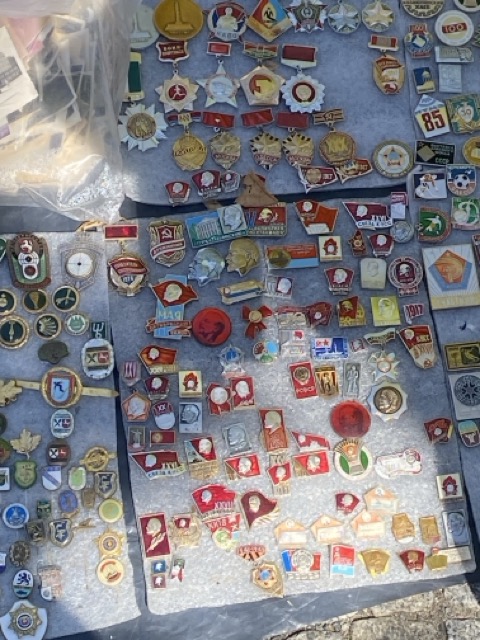
We came to a bric-a-brac market with some interesting communist badges.
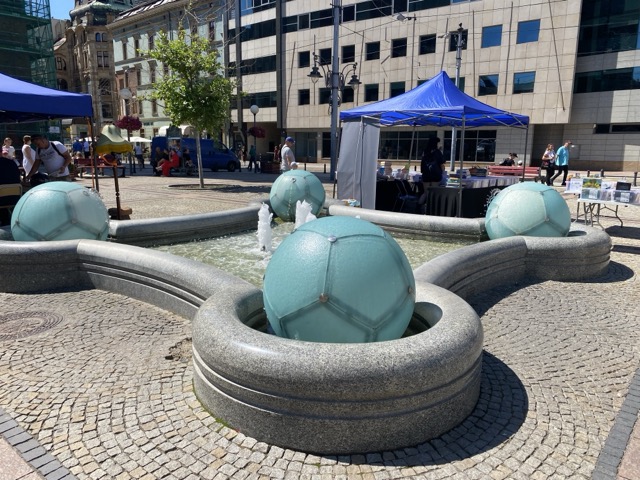
We stopped for lunch at a ‘milk bar’ which is an old communist type canteen which serves good Polish traditional food.
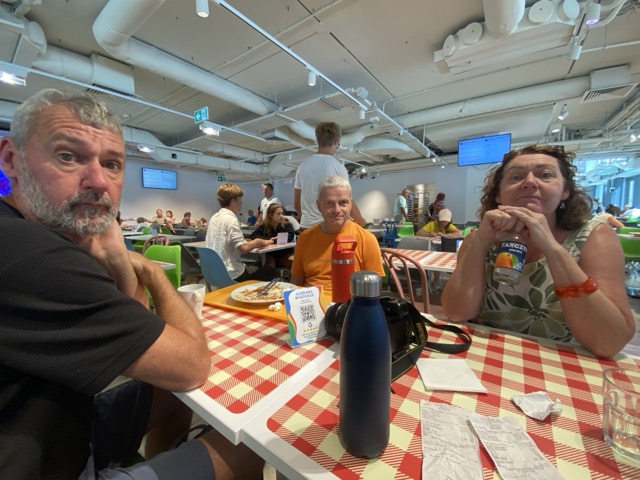
Ordering is by screens similar to McDonalds and big screens tell you when your order is ready for pickup. The atmosphere is very work canteen like. We had pierogi dumplings, potato pancake and stew and stuffed cabbage roll. It was all very good. The bill came to around 25 Australian dollars – great value! We will be visiting more of these!

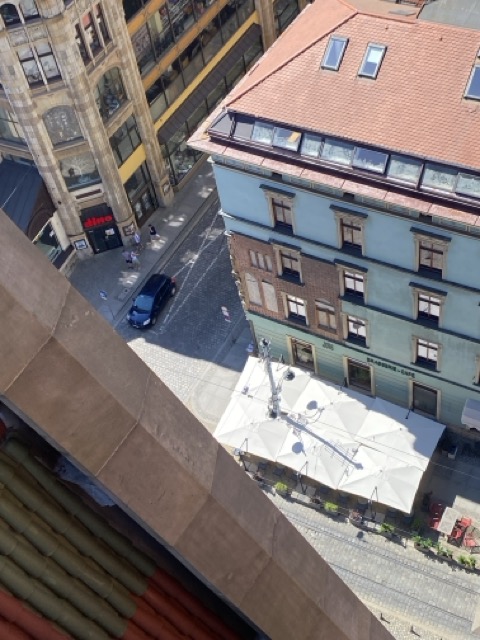
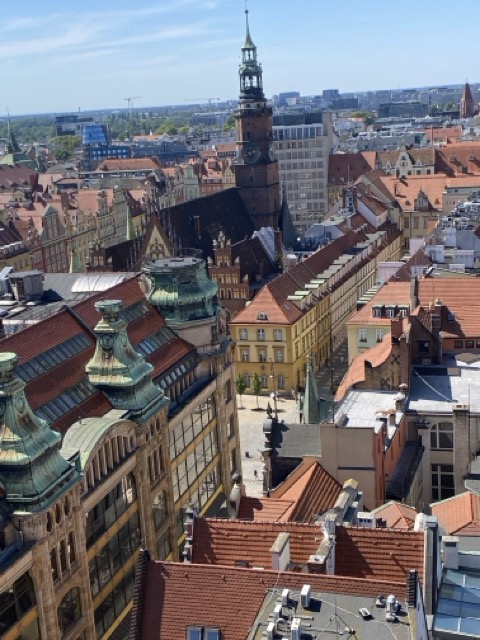
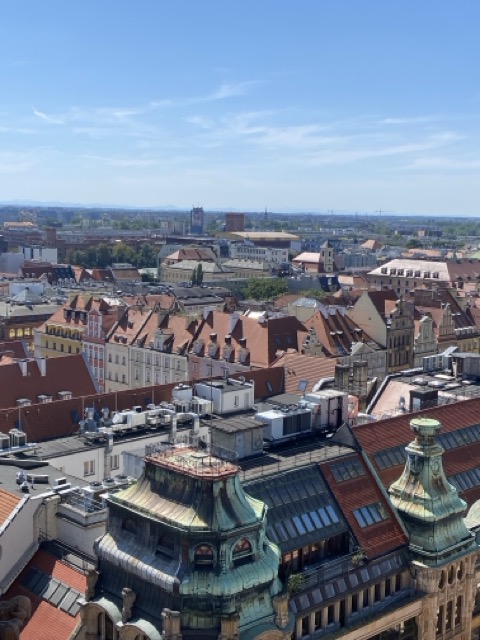
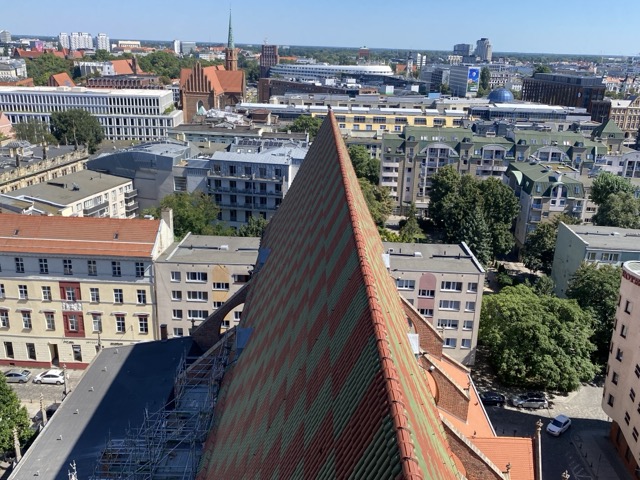
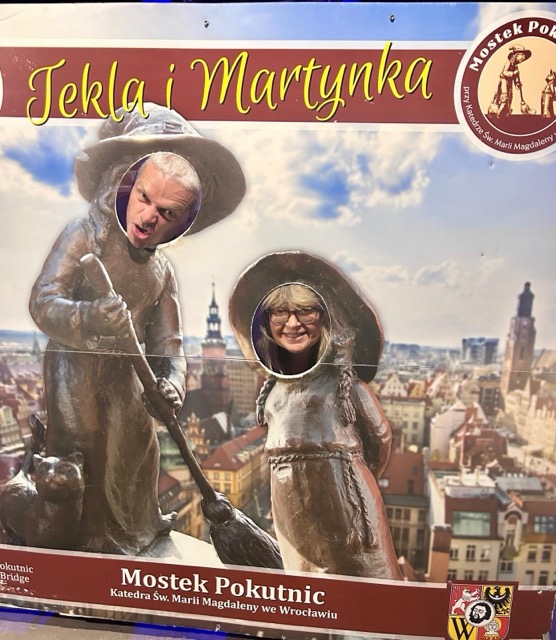
We then went to Penitents bridge, an open air footpath between the 2 towers of Mary Magdalene’s church. The climb was over 200 steps which was hard after a big lunch!
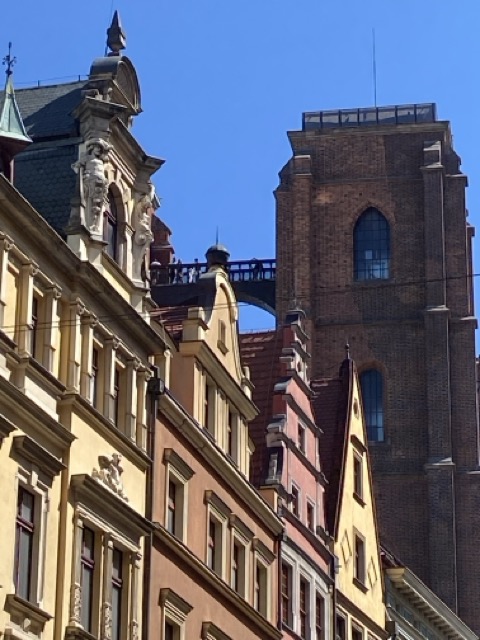
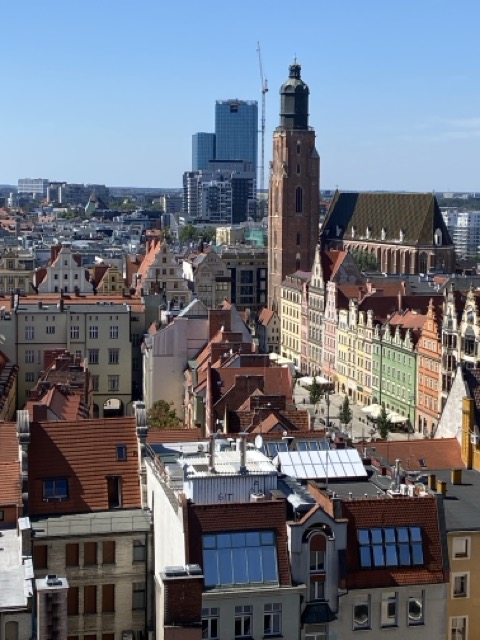
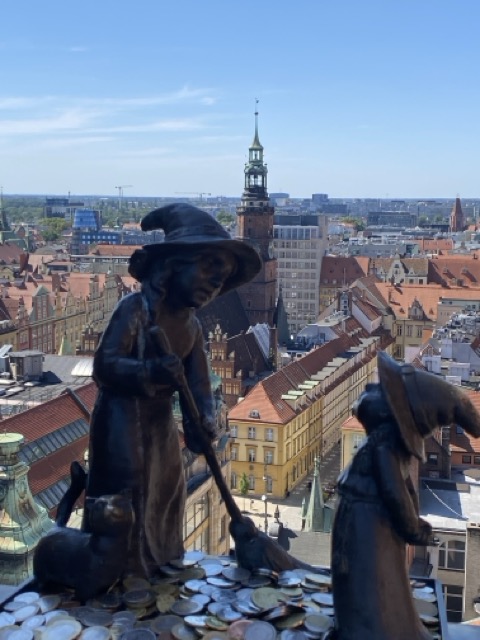
It was crowded but the views were great and we found more gnomes.
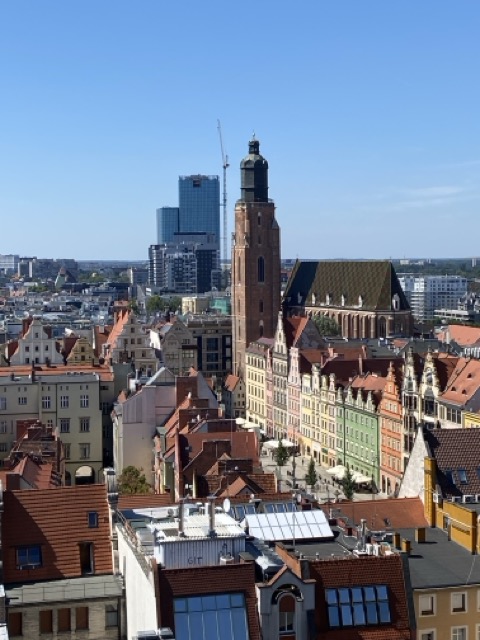
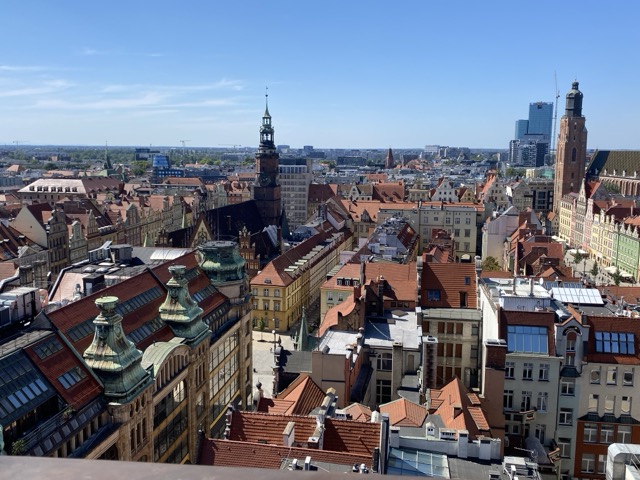
Here is the story:
In the heart of Wrocław lived a beautiful but vain girl named Tekla, who refused to work, cook, or marry, choosing instead to spend her days flirting and admiring her reflection. Her lazy lifestyle deeply angered her hardworking father, who eventually cursed her in a fit of rage to be banished to the highest, coldest place in the city to learn the value of labor. Instantly, Tekla’s soul was swept high above the streets onto the narrow footbridge connecting the towers of Saint Mary Magdalene Church, where she was condemned to sweep the windy stone walkway with a heavy broom for eternity. Passersby far below could hear her broom scratching through the night, leading locals to call the passage the Witches’ Bridge.
Tekla’s endless penance finally changed on a stormy night years later when a kind-hearted young witch named Martynka flew past the towers. Pitying the weeping girl and seeing she had truly learned her lesson, Martynka used her magic to break the father’s ancient curse. Freed from her eternal chore, Tekla’s soul finally found peace. Today, two tiny bronze dwarf statues sit on the high walkway, immortalizing the vain Tekla holding her broom and the sweet witch who saved her.
Here are the gnomes representing the characters in the story.
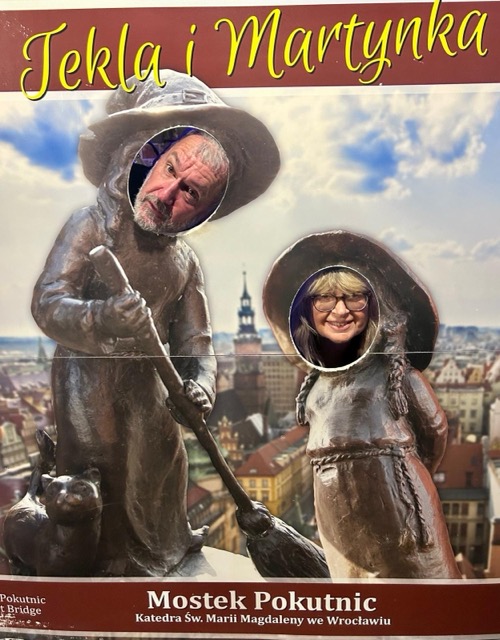
We had a bit of fun too!
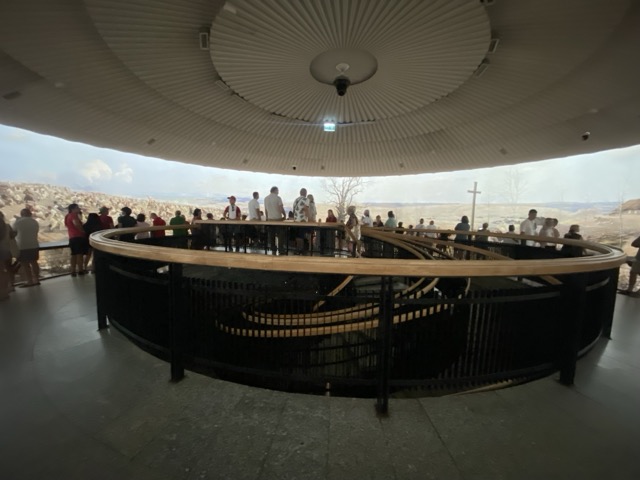
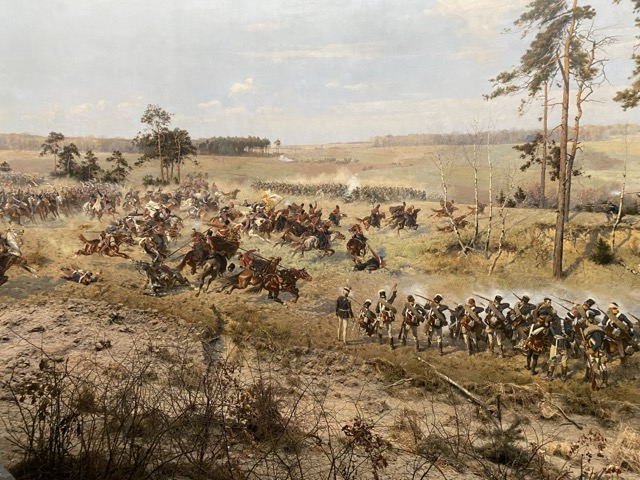
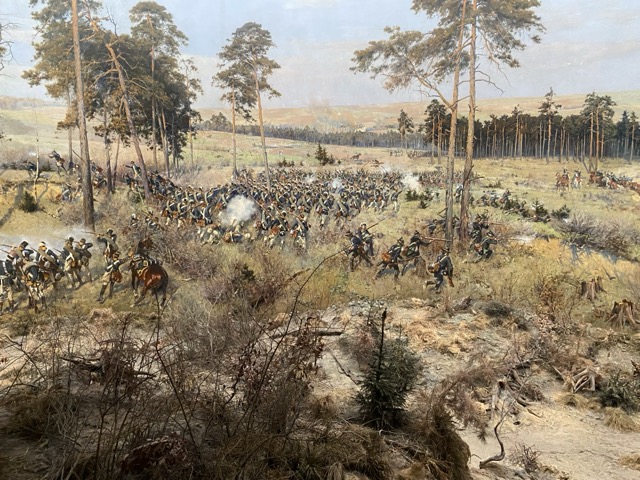
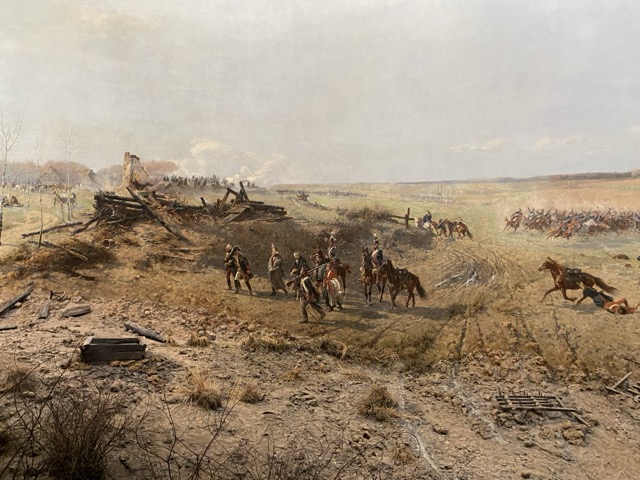
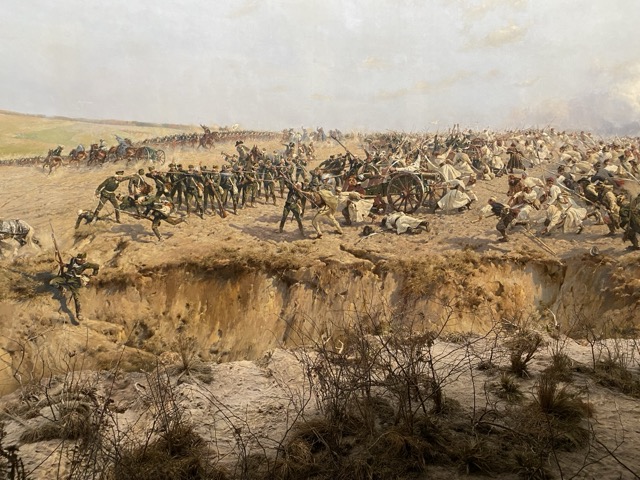
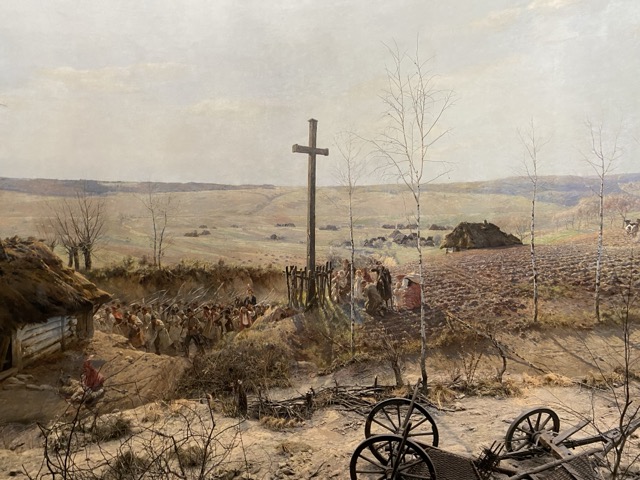
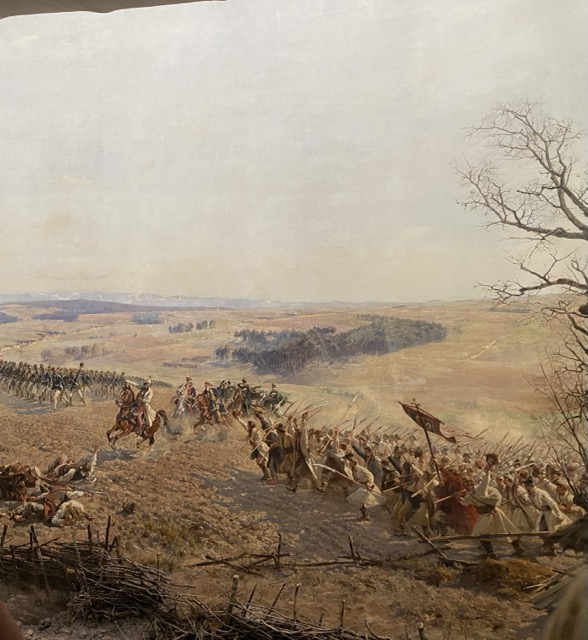
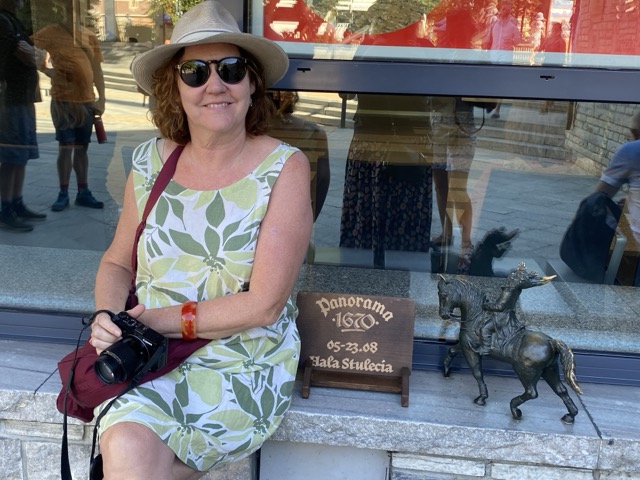
After getting down all the stairs again we made for the Panorama of the Raclawice Battle in 1794 where Polish peasants defeated the Russian army. This is apparently the number 1 tourist site in Wroclaw.
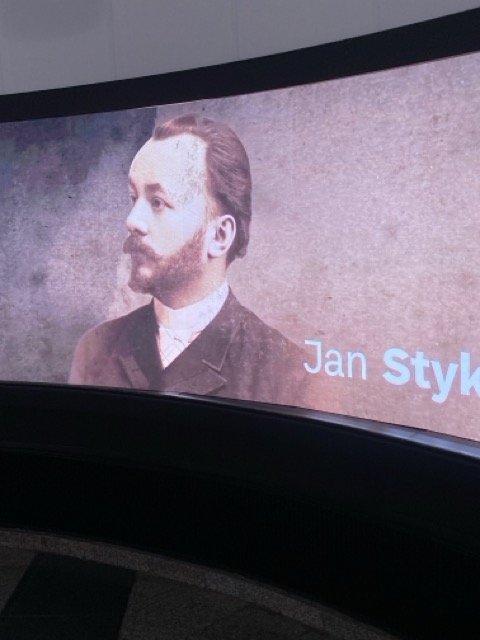
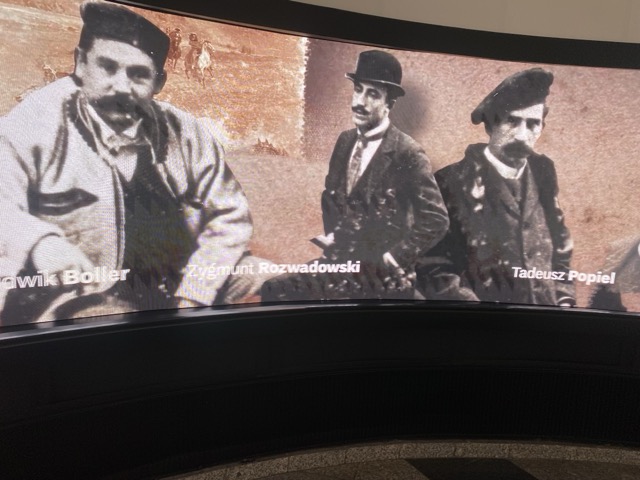
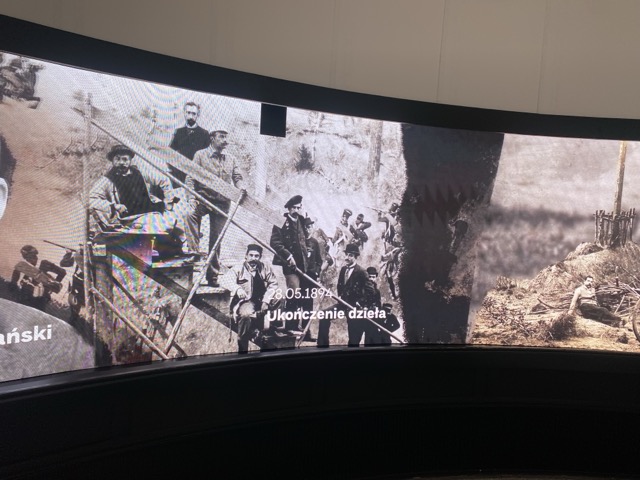
The battle is seen as a symbol of Polish independence. In the late 1800s a group of men wanted to immortalize it so created a committee to get a huge canvas painted. It is 114 metres long and 15 metres high. It was on public view until WWII when it was rolled up and hidden in a monastery.
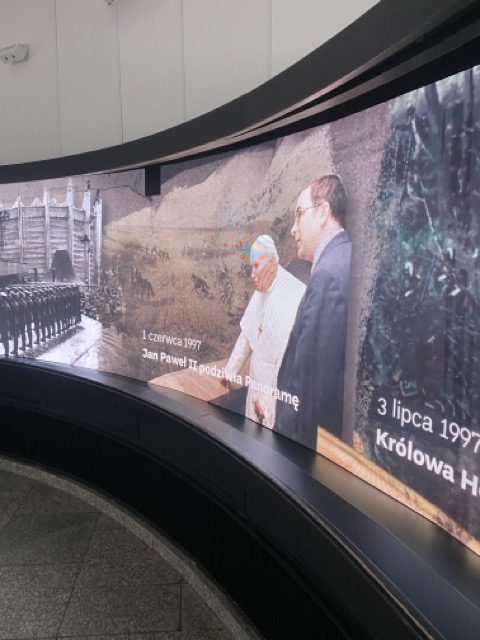
The communist government wasn’t keen to get it back since it was anti Russian. It was only after the socio-political shift and the emergence of the Solidarity movement in August 1980 that public committees successfully pressured the government to allow a dedicated rotunda to be built. It took 3 years to renovate it and it was reshown in 1985.
The panorama is very lifelike and has good depth perception. We were given audio guides that gave an English description of the various areas as a Polish voiceover was happening. We really enjoyed it.
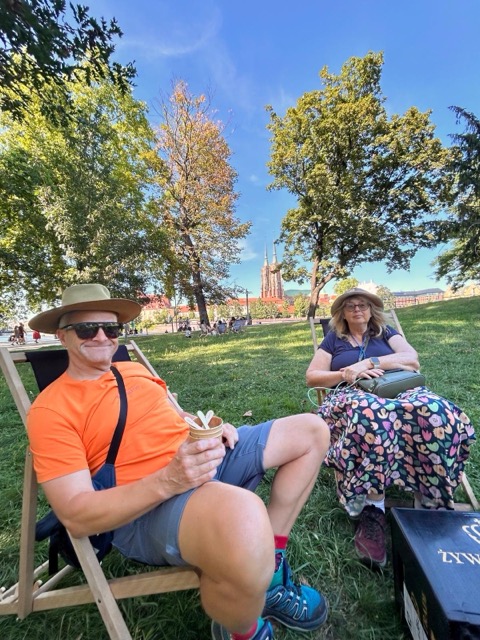
The potato pancake had now worn off and we found a nice spot for a frozen yoghurt near the river.
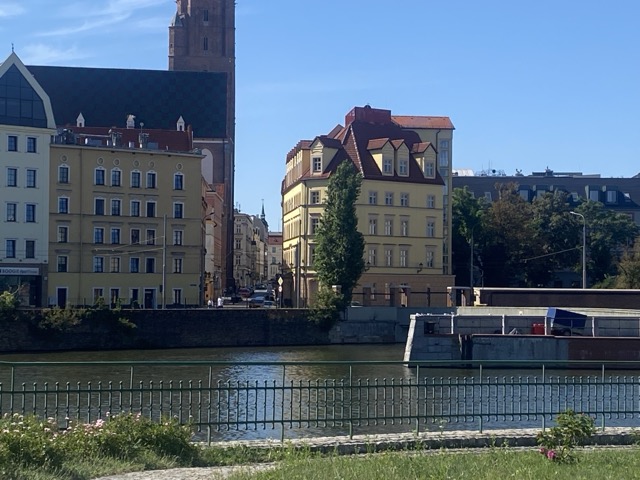
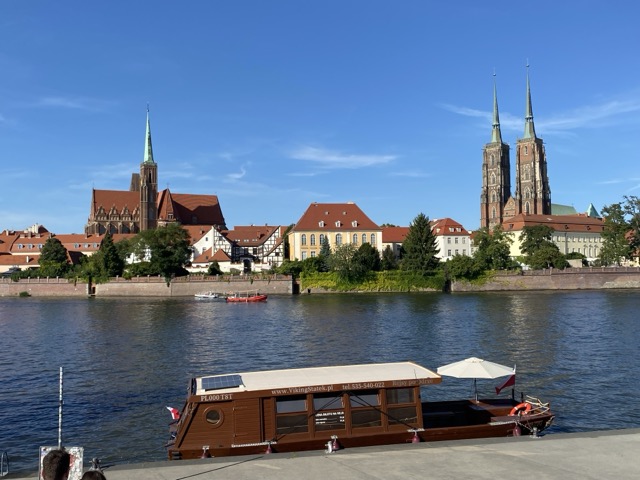
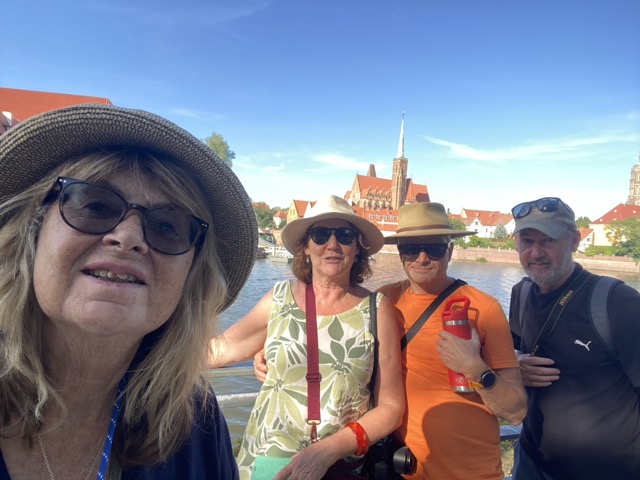
We then walked along the river to our tram back to the campsite.
We had a light dinner and then off to bed.


Leave a Reply