All of us cycled to the Berlin Olympic Stadium – apart from Angela unfortunately as she didn’t have a bicycle here.
We arrived at the right time for an English tour that gets you into many VIP areas you can’t reach by yourself. Some Berlin bears welcomed us – and some imitators.
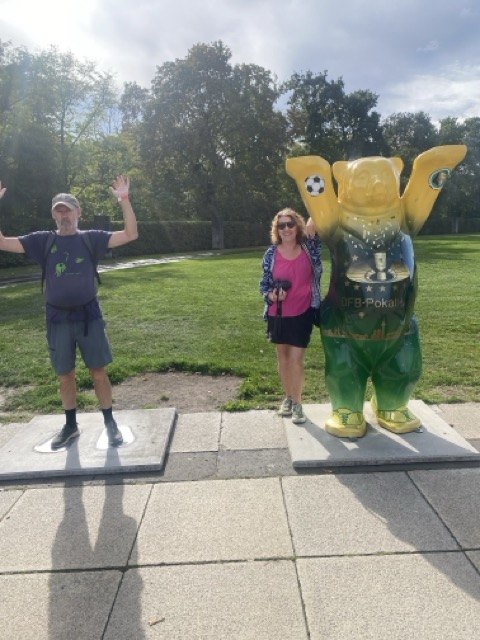
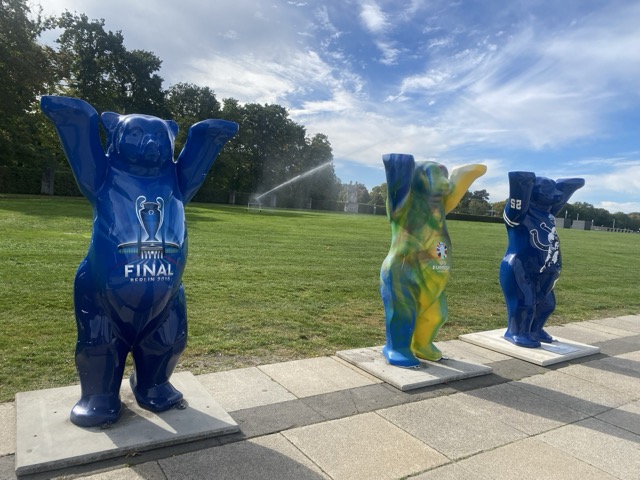
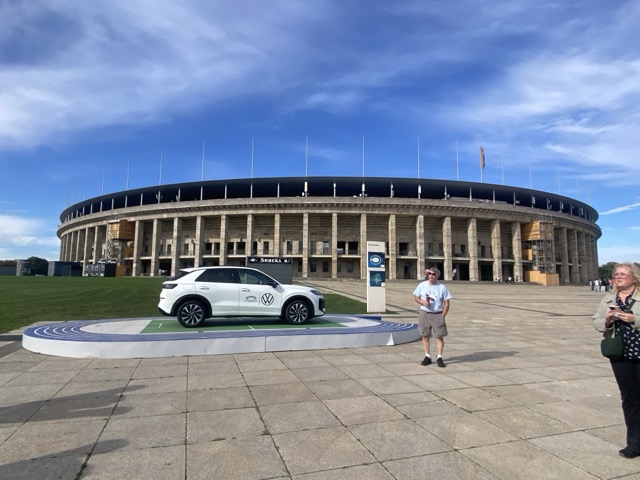
We started in the main stadium seating area and found out some history.
The Stadium was built for Hitlers Olympic Games in 1936. Hitlers held the games to impress the world. He also wanted all the attention on himself.
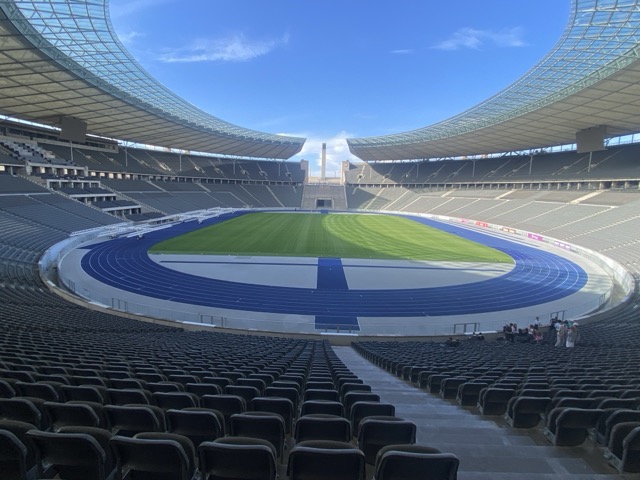
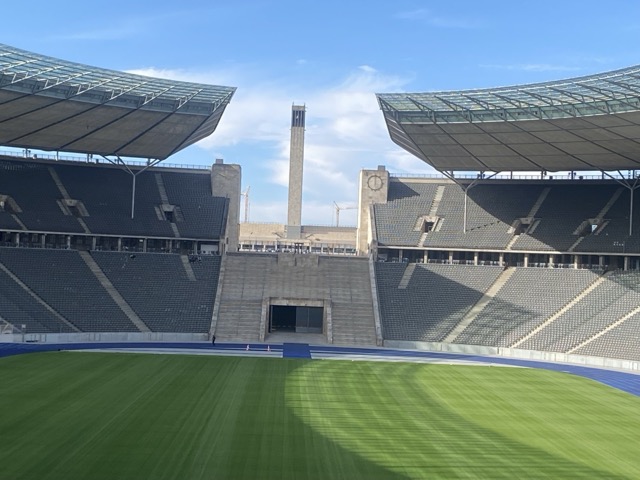
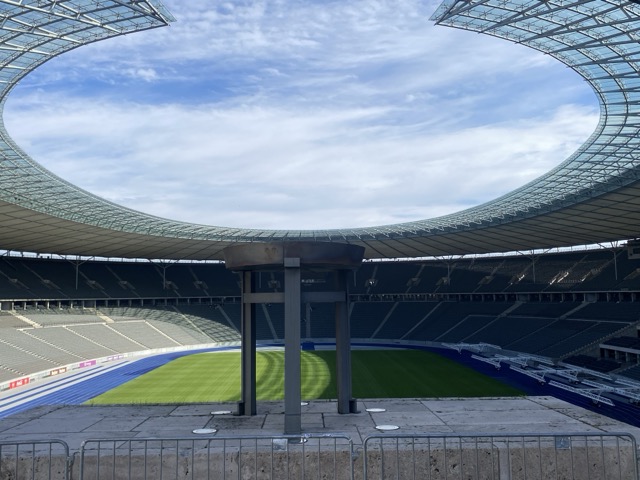
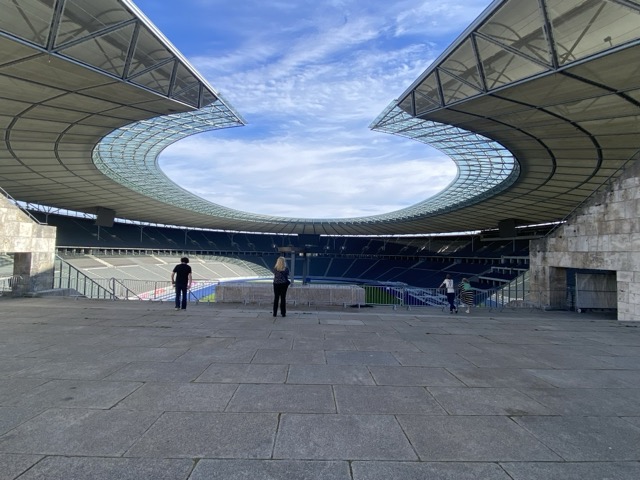
It’s still used a lot including by the local soccer team and has recently had a new roof put on it. Out of 36 proposals only 1 company was able to make the metal structure with the gap in it.
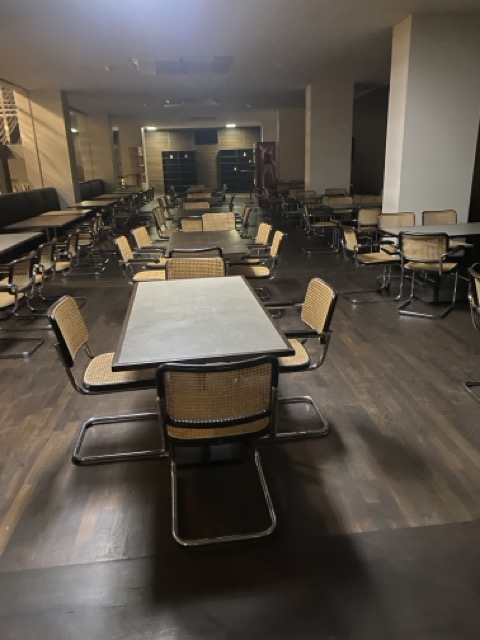
We then went into the private areas. We saw the Jesse Owen private bar area. He famously won four gold medals at the Berlin Olympics challenging Adolf Hitler’s notions of Aryan supremacy. Apparently Hitler was jealous of the attention Jesse received.
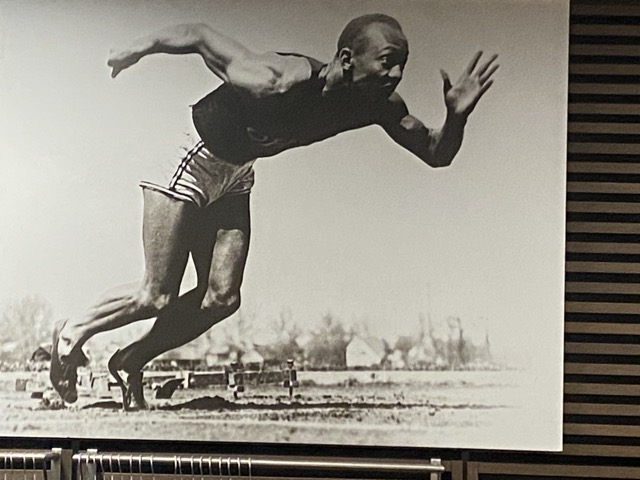
Jesse and his wife were made to take back entrances in some places but he was always pleasant and courteous to everyone. He was well respected.
The design is very bauhaus – open and simple with clean lines – very different from the Nazis liking for showy designs. They would have hated it.
We went to the VIP area and it is where Hitler and his cronies were sitting on the Olympics. The platform Hitler stood used to project by 1.5 metres on has been cut off to stop the location becoming a significant site to be visited by neo-nazis.

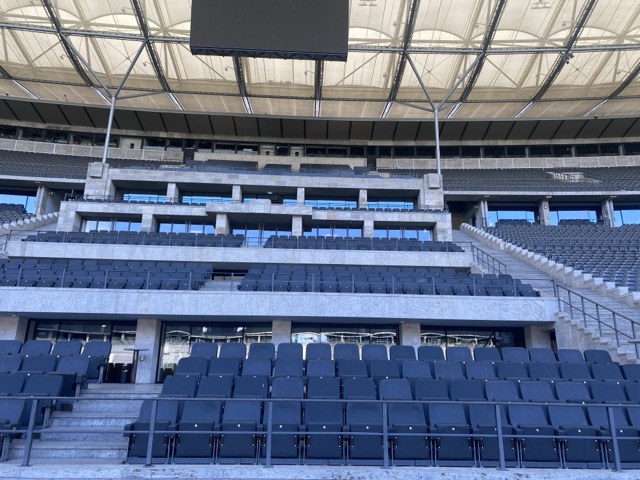
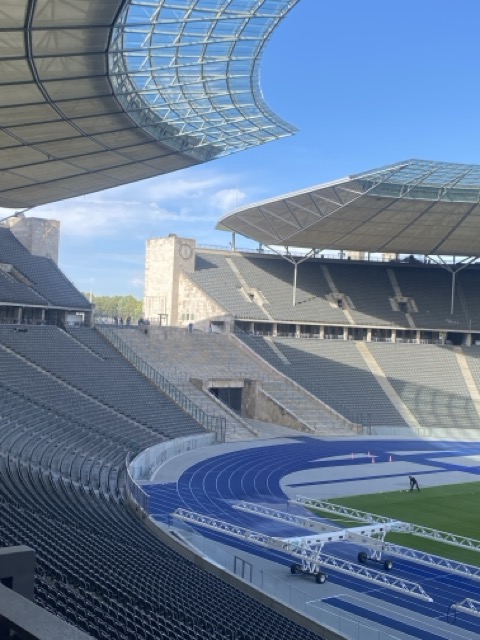
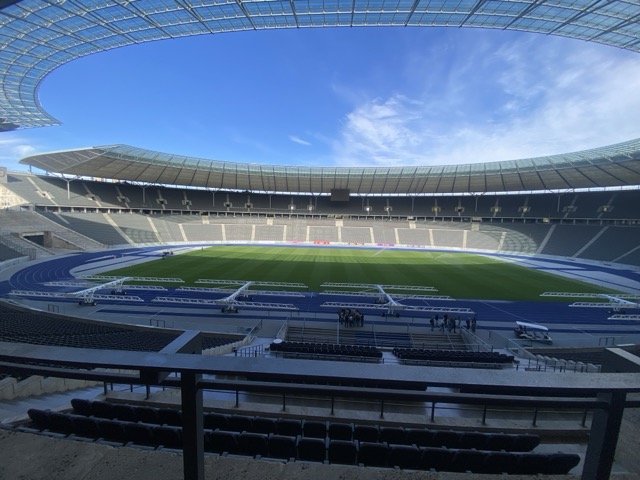
We had a weird feeling sitting there.
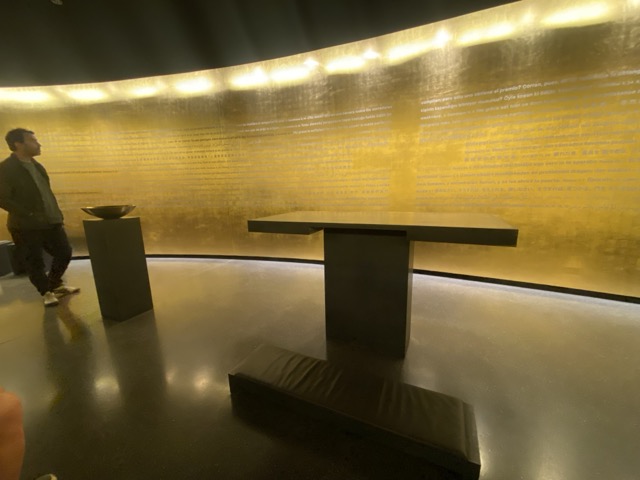
Then into the chapel which has gold leaf walls with writing in every language cut out of it. Many athletes apparently come here before their events.
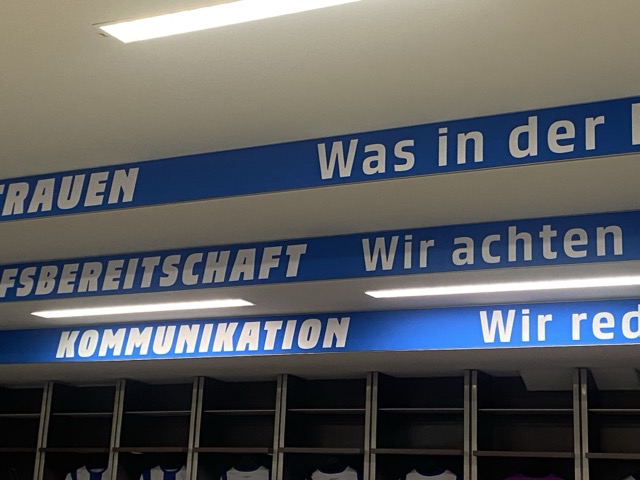
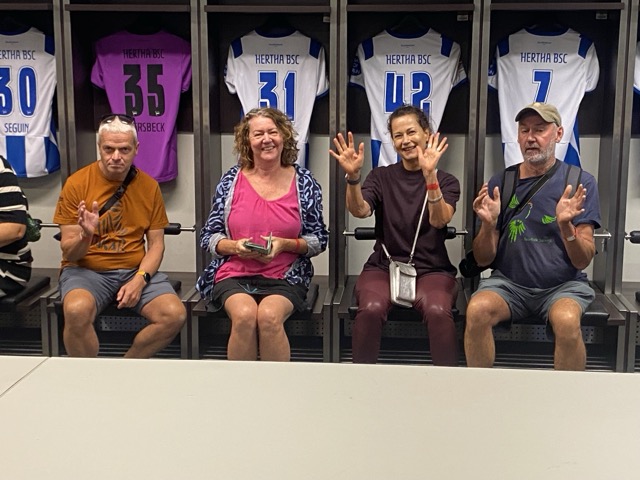
We saw the local football team Hertha BSC changing room – all very blue. The track is actually the same blue colour as their strips. It’s the only one that colourful in the world.
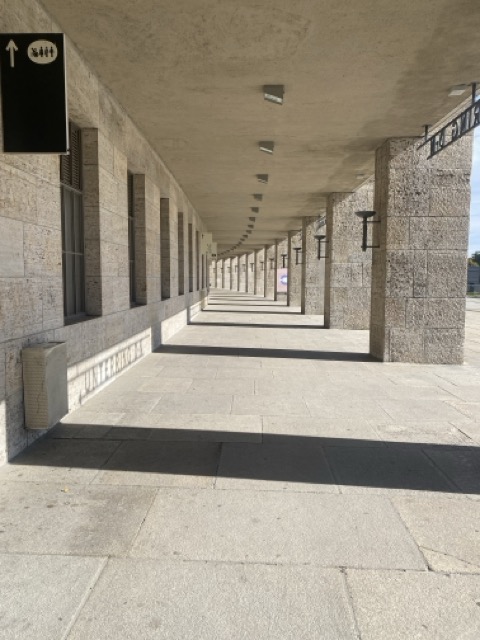
This area used to be where cars drove in to drop off VIPs. It’s now a bar area.
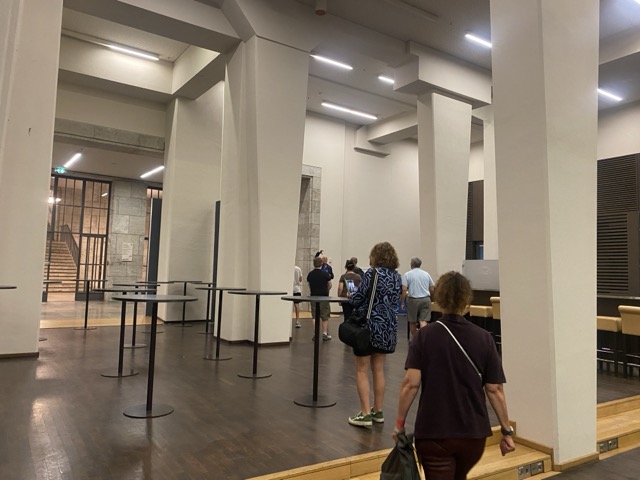
Then we were finished – but we had time to reconnoiter the outside area.
We first saw the original bell from 1936.
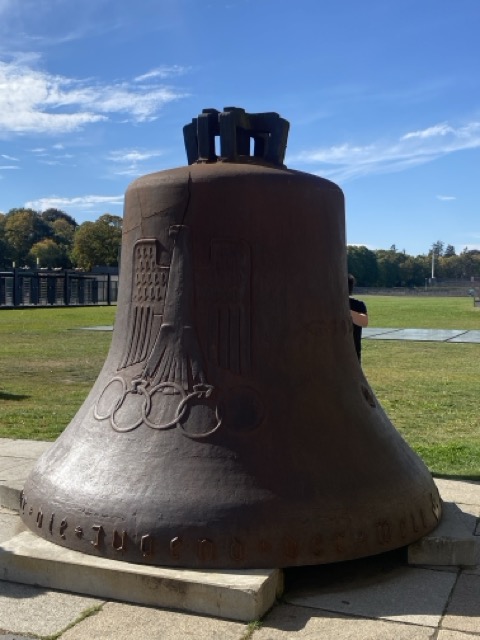
Here is its story:
“In 1936, the Olympic Bell was transported from Bochum to Berlin with an official escort provided by National Socialist organisa-tions.
Until 1947 the bell hung in the Bell Tower, standing on the western edge of the Reichssportfeld above the Langemarckhalle, which was dedicated to the fallen of the First World War. A great number of young German war volunteers were killed during a German assault near Langemark, Belgium, in 1914.
Their deaths were transfigured in the Lange-marck myth, which portrayed their deaths as the selfless ‘sacrifice of the youth’
In 1936 Reichssportführer Hans von
Tschammer und Osten, declared the Olympic Bell ‘an eternal admonition to our heroes, who sacrifice their lives’ and a reminder to the living of their ‘duty to the nation’.
When the Bell Tower was demolished with explosives in 1947, the bell came crashing down. Ten years later, it was re-installed
– complete with barely concealed Nazi symbols – on the southern forecourt. In 1982, the bell was dedicated to the memory of the victims ‘of war and violence’; no clear break was made, then, with the ideological meaning conferred upon it in 1936. Since 1962, a new bell (designed by Werner March) has been hanging in the Bell Tower.”
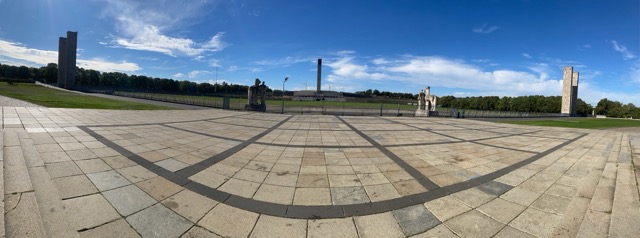
We went round the outside of the stadium seeing the Mayfield which was used as a Nazi marching parade ground.
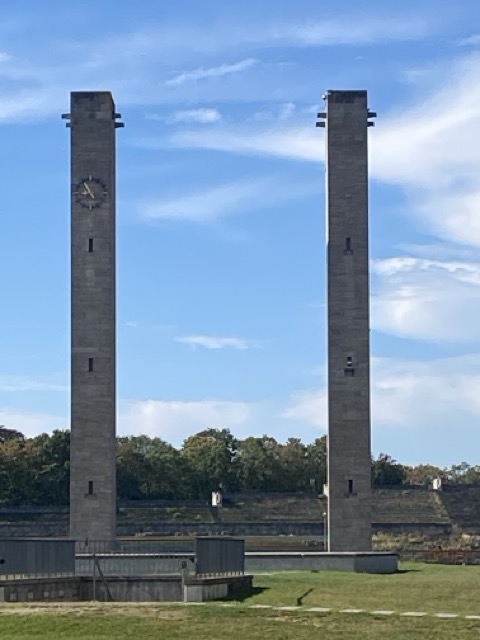
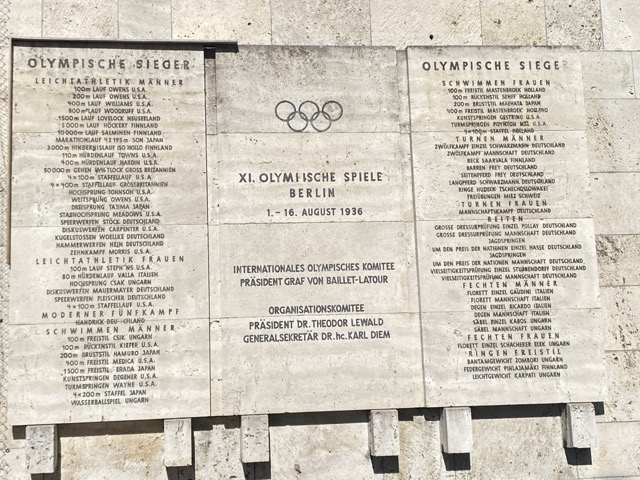
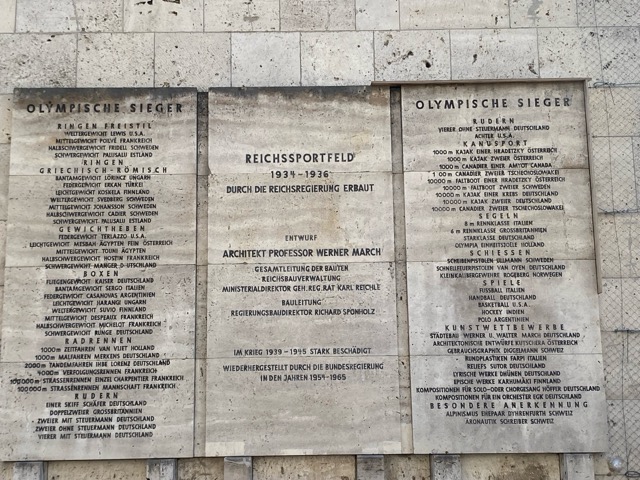
We arrived at the area where there is a gap in the roof and this is where the Olympic torch had been. On either side are boards listing the medal winners and their country.
The swimming and diving pool are round the back of the stadium.
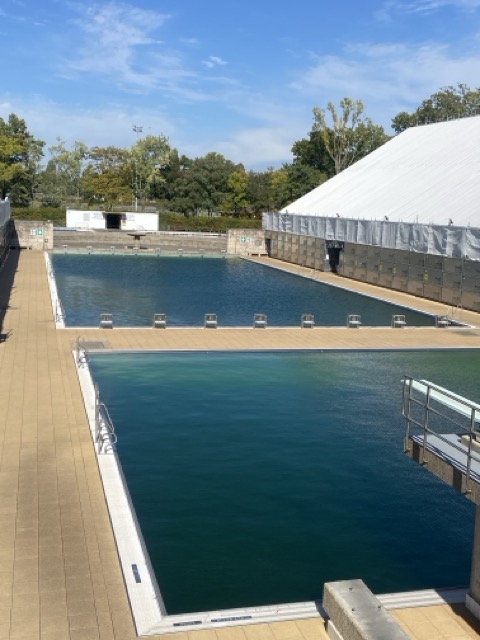
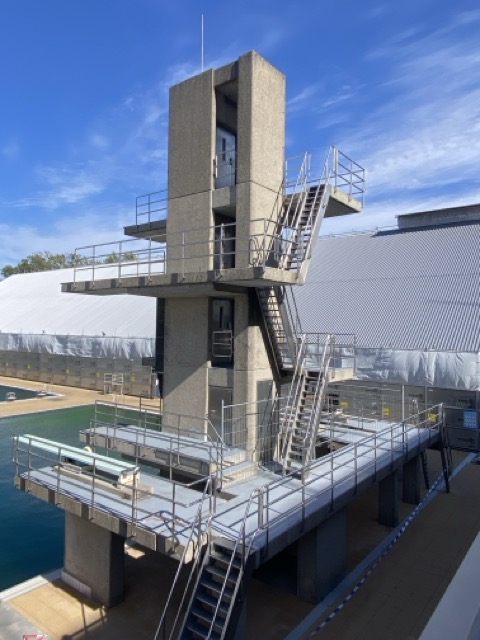
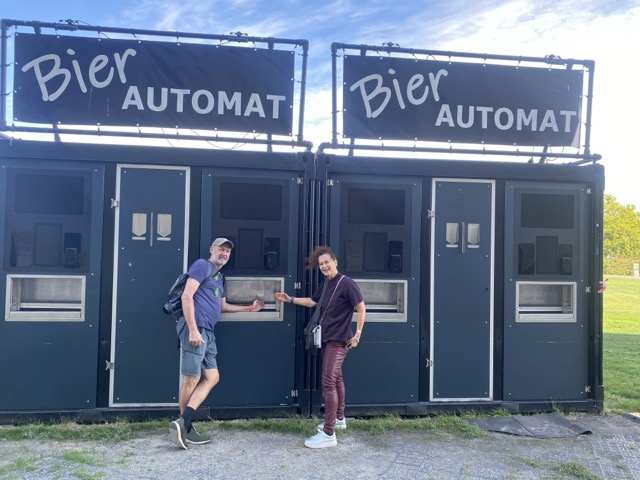
Glenn and Angela found an automated beer dispenser – unfortunately not working.
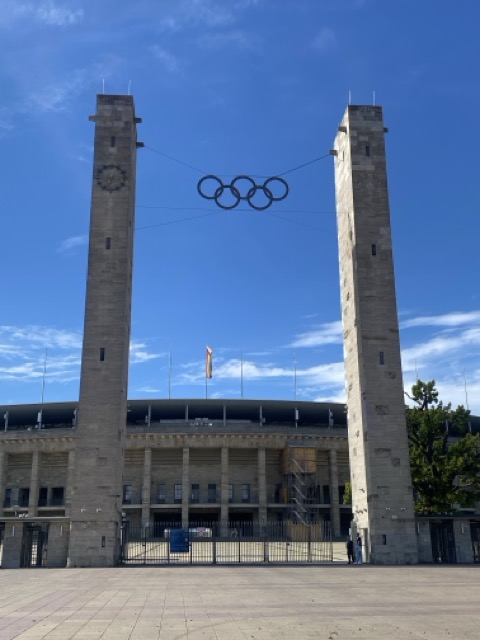
We finished off out the front of the stadium.
We then got back on our bikes and cycled to Spandau Pier where we met Angela who had taken the bus there.
We then went on a cruise of 7 Berlin lakes for 3.5 hours.
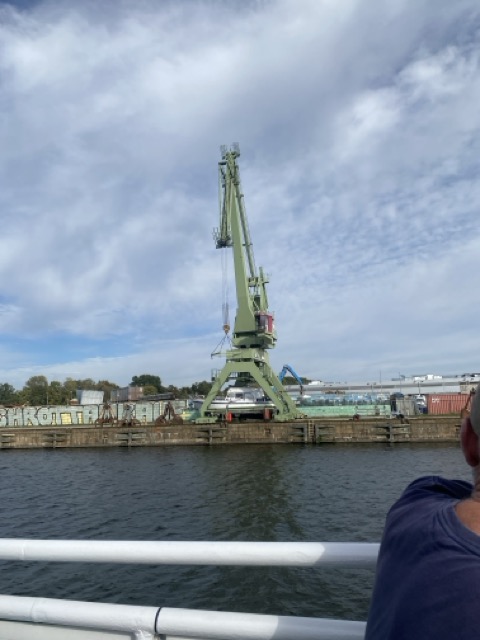
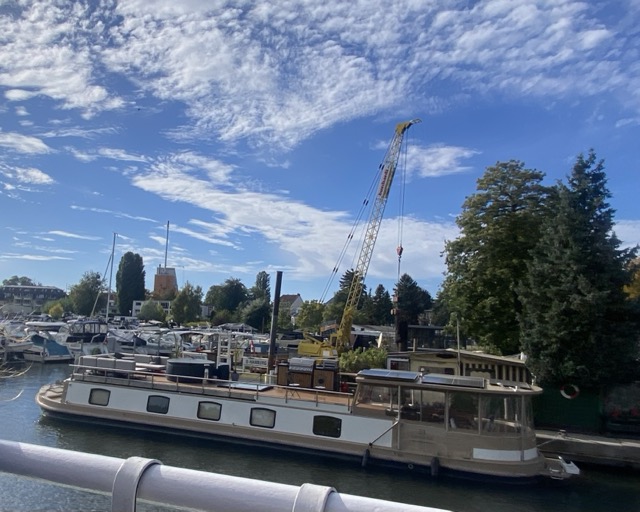
Thete were some very nice locations and huge houses on the banks.

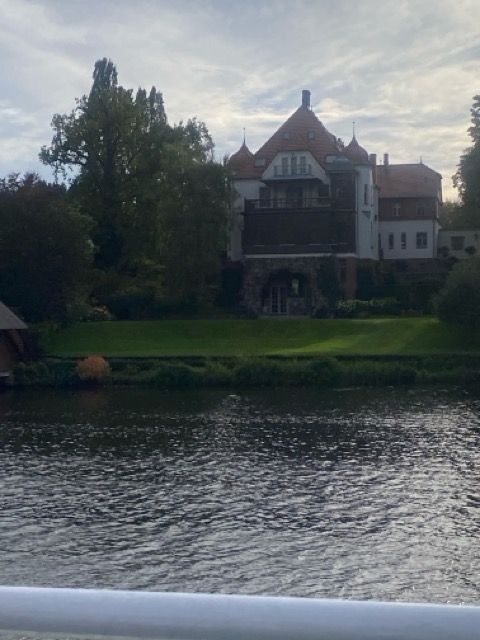
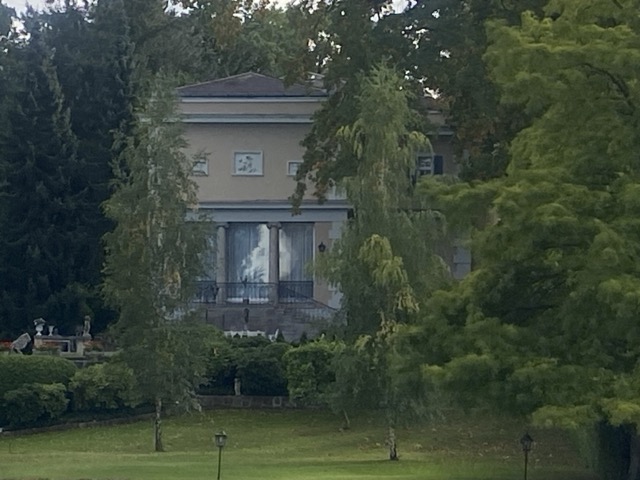

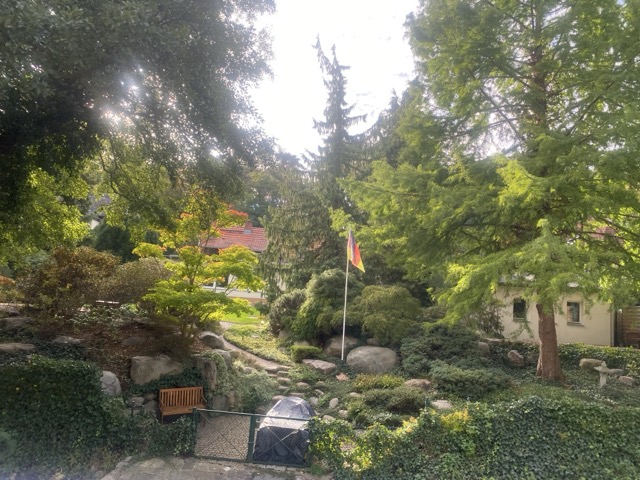
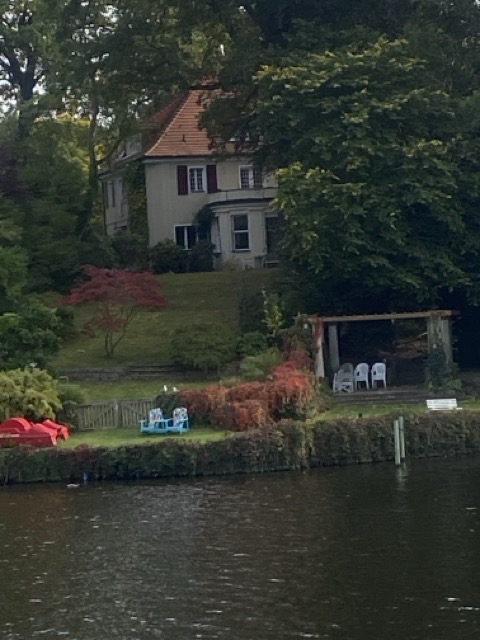
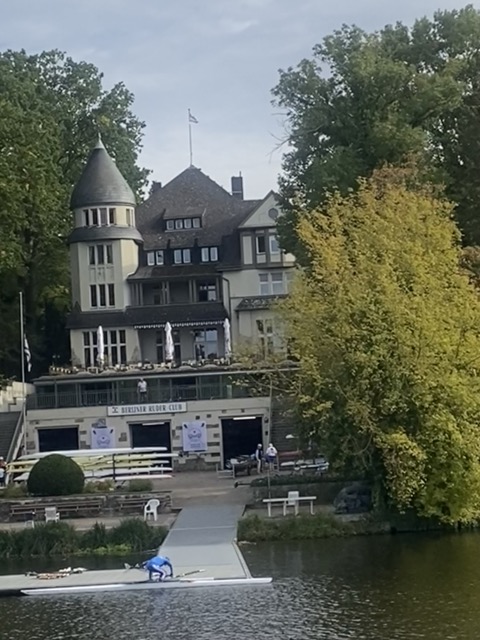
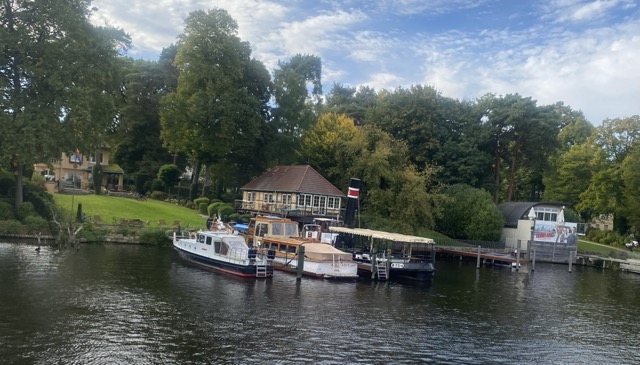
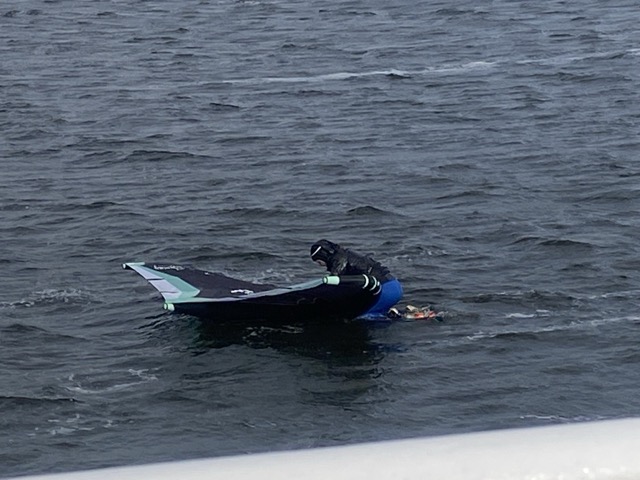
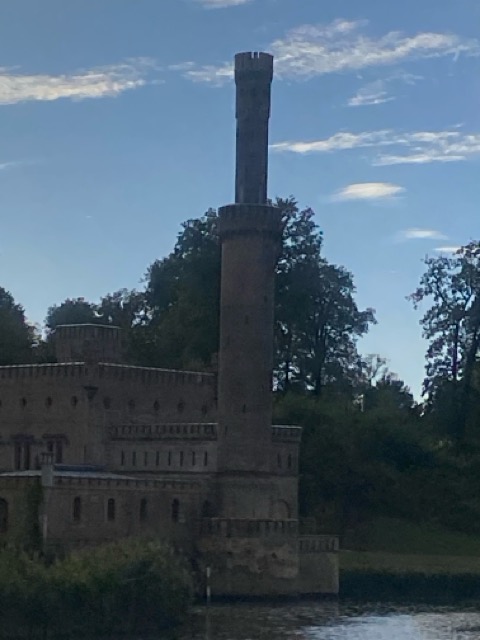
Significant palaces were :
Am Großen Wannsee – where the Nazis planned the ‘final solution’ and documented it in 1942. The document was used as evidence to prosecute the signatories in the Nuremberg trials.
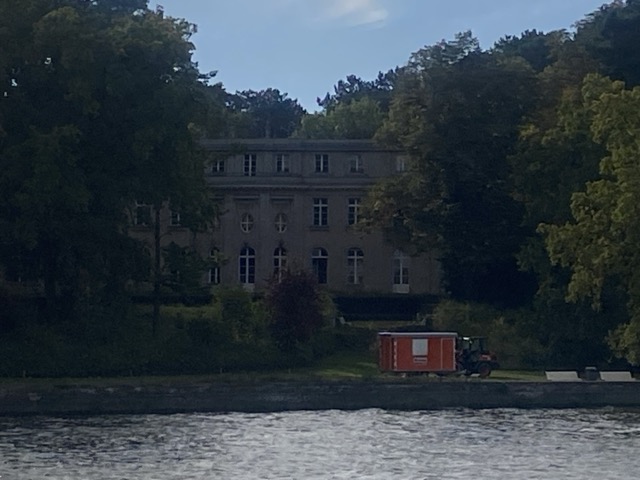
Cecilienhof Country House: the location of the Potsdam conference where The Big Three—Soviet leader Joseph Stalin, British Prime Minister Winston Churchill (replaced on July 26 by Prime Minister Clement Attlee), and U.S. President Harry Truman—from July 17 to August 2, 1945, to negotiate terms for the end of World War II. Unfortunately it’s hidden by trees.
After chilling out for the 3.5 hours we got back on our bikes and cycled home via Aldi to cook a bbq with sausages (vegan for Angela) and lots of vegetables. It was enjoyed after the big day of cycling.
Leave a Reply