We left early to cycle to the Westerplatte coast area where first shots of WWII were fired.
The initial path through the forest wasn’t too bad for bikes – only a bit sandy in places. We are near the coast so it’s to be expected.
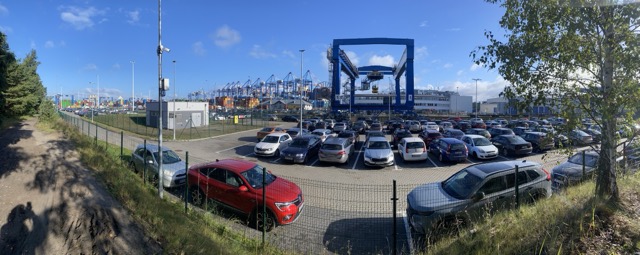
We were basically going around Gdansk port which is huge.
At one point we had to go through a port carpark then tried to get through a port barrier but were sent back over a bridge.
Eventually we arrived at the Westerplatte Visitor Centre where Lisa found a map for us of the sights.
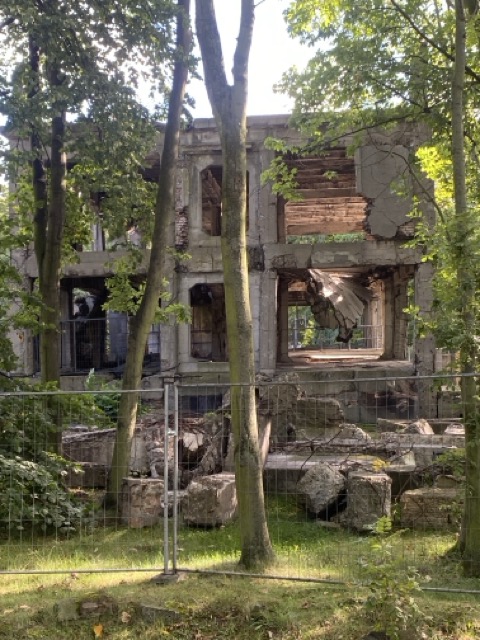
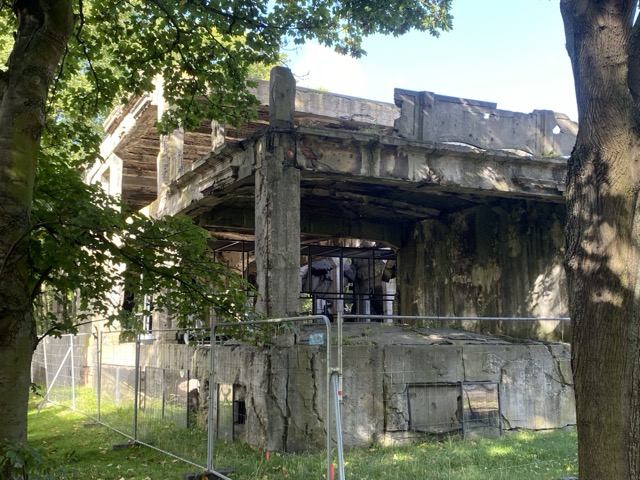
We continued cycling and everything seemed to be under renovation. We came to a large destroyed building – the barracks.
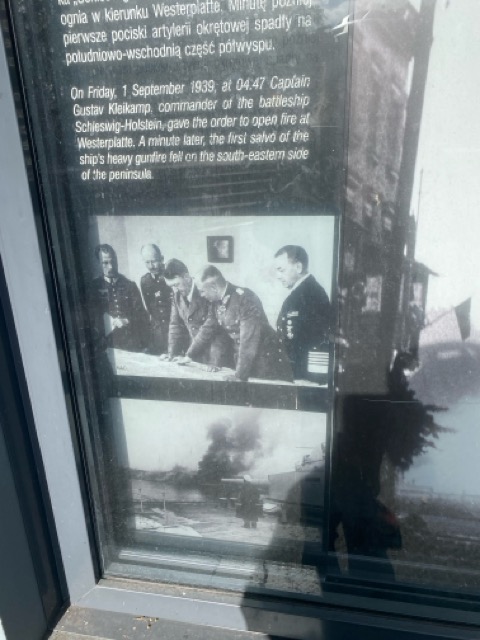
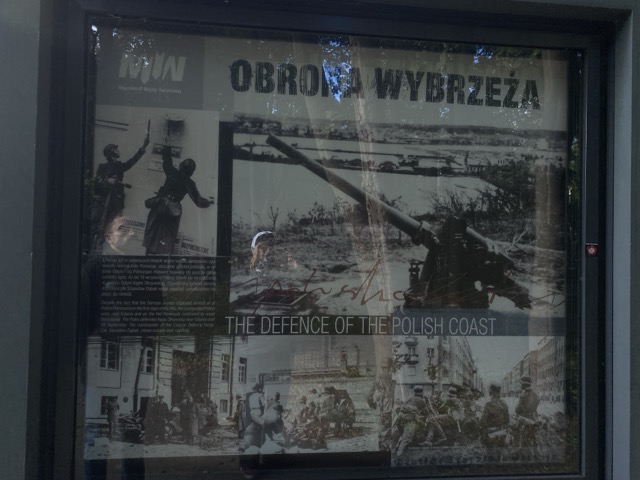
Then there was an area of boards explaining what happened in 1939. Due to the events happening in Europe Poland had already prepared defenses in the area of Westerplatte.
A German cruiser came into Gdansk port on 25 August on a supposedly friendly visit. It had 225 army members hiding in the ship. They left the port and then fired on the Westplatte area on 1st September.
The Polish garrison consisted of fewer than 200 soldiers led by Major Henryk Sucharski and Captain Franciszek Dąbrowski. They were ordered to hold the position for just 12 hours to allow main army mobilizations.
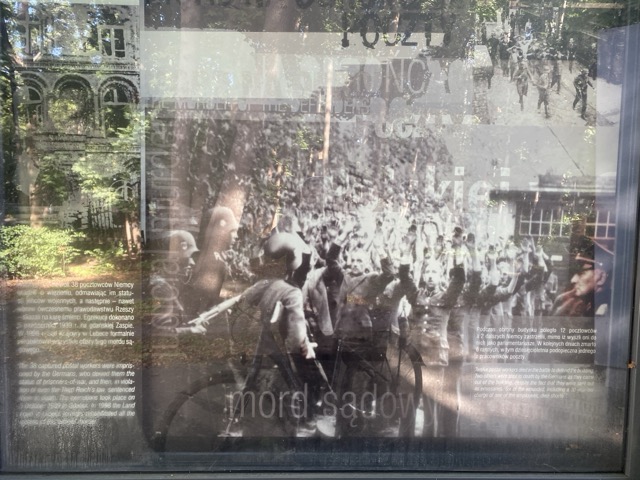
On the 1st day 4 were killed and 4 injured.
Against overwhelming odds, they defended the peninsula for seven days. They repelled 13 heavy German ground assaults, endured relentless naval bombardments, and survived heavy air raids by Stuka dive-bombers. Out of ammunition, medical supplies, and food, Major Sucharski surrendered on September 7.
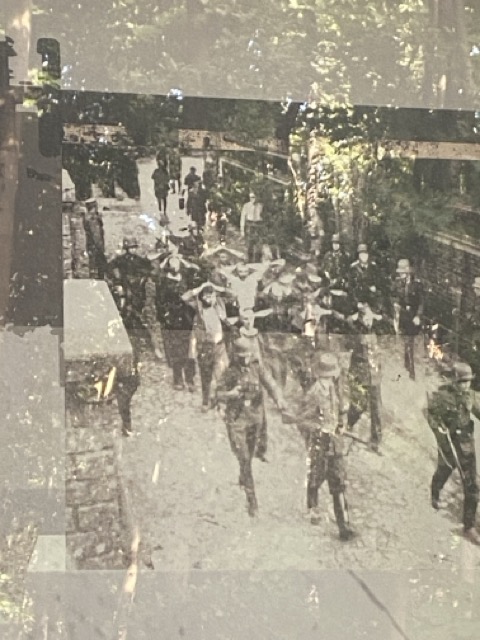
The defense became a massive symbol of resistance and morale for the Polish. The Germans couldn’t believe there were so few soldiers for them to hold out for so long.
Unfortunately the Polish army couldn’t stand up to the very large German army and the Russians invading from the east in their pact with Germany to divide Poland. The Polish Army surrendered the country on 17th September.
Hitler arrived at Westerplatte on 21st September to show his appreciation to the German soldiers for taking Poland.
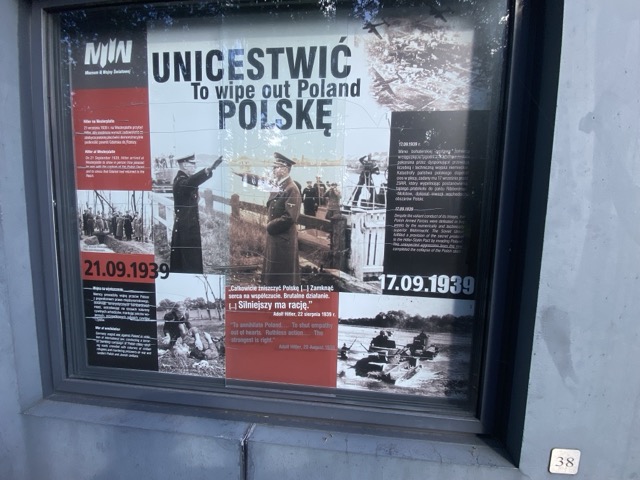
By October 1939 20,000 Poles had been killed. Germans had targeted people from a list of names created before the attack.
We continued to the large monument erected to commemorate the battle.
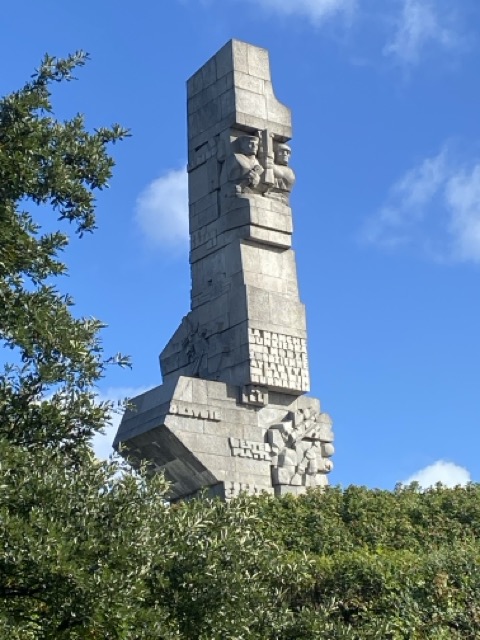
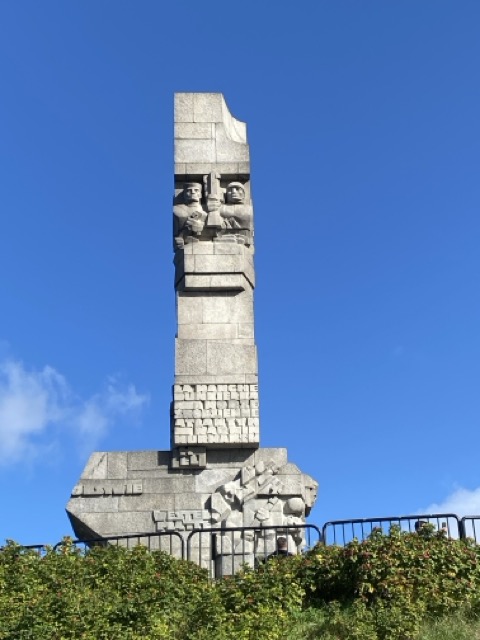
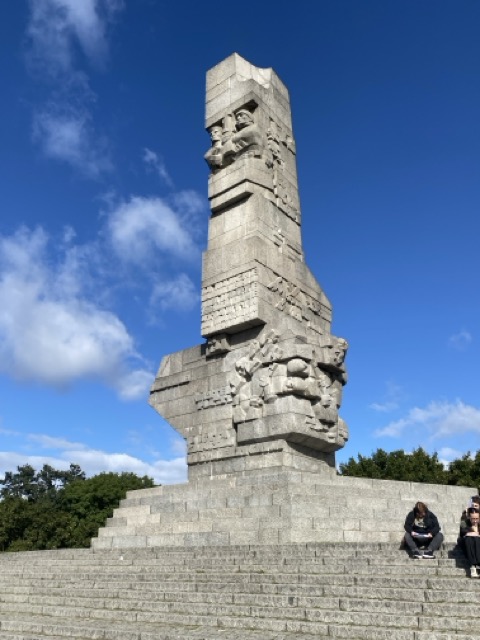
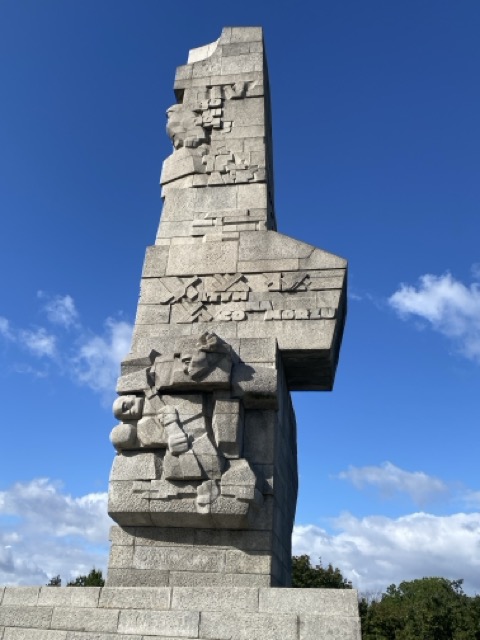
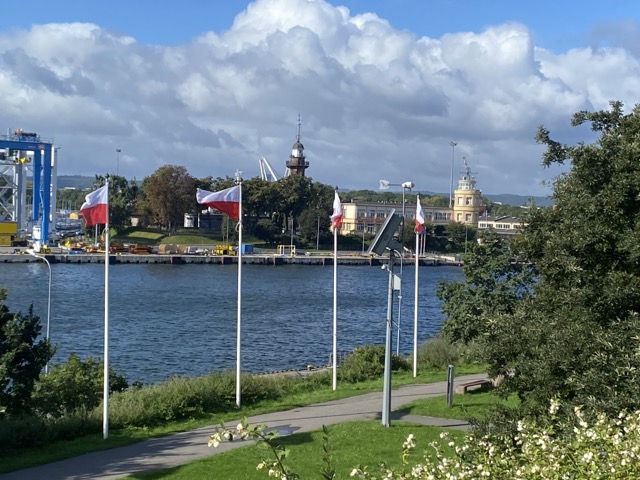
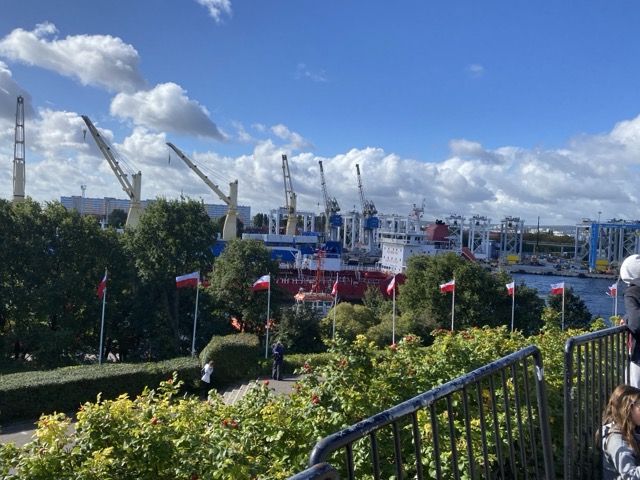
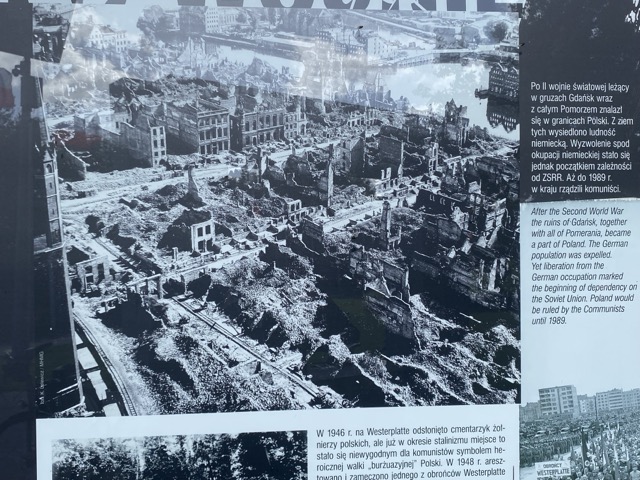
The Communists’ attitude towards Westerplatte changed with the end of Stalinism in 1956. In order to win society’s acceptance of their rule, the Communists eagerly appealed to national traditions and symbols.
In 1966, a 25-metre high monument was erected on Westerplatte. A few months later, in a feat of engineering, Guardhouse no. 1 was relocated to preserve it from demolition. In 1962, however, the concrete cross was removed from the cemetery and re-placed with a T-34 tank. The Russians still didn’t like religion.
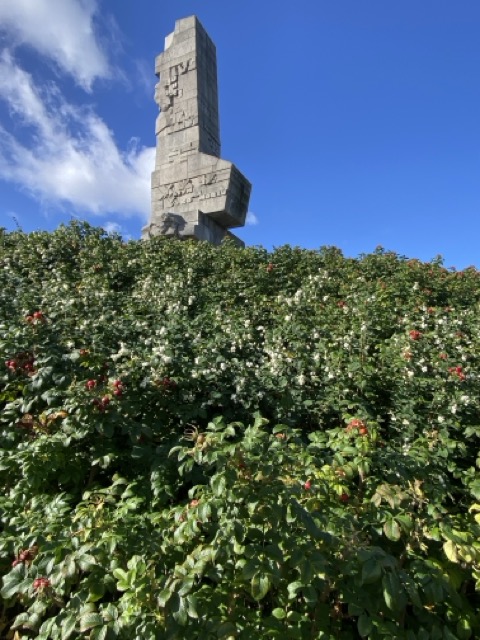
The red and white rose hips are obviously representing the Polish flag.
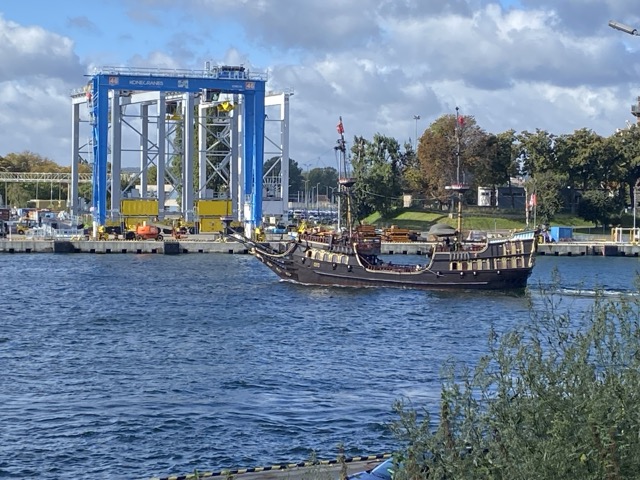
The pirate ship went past and did a u turn in front of the monument before heading back to the middle of the city. It gets around!
As we left there was a ceremony with school children happening at the cemetery where the 15 soldiers who died were buried. Two big helicopters flew overhead in formation.
We then cycled back to the campsite – far quicker than on the way there.
We had a quick van lunch then off into town.
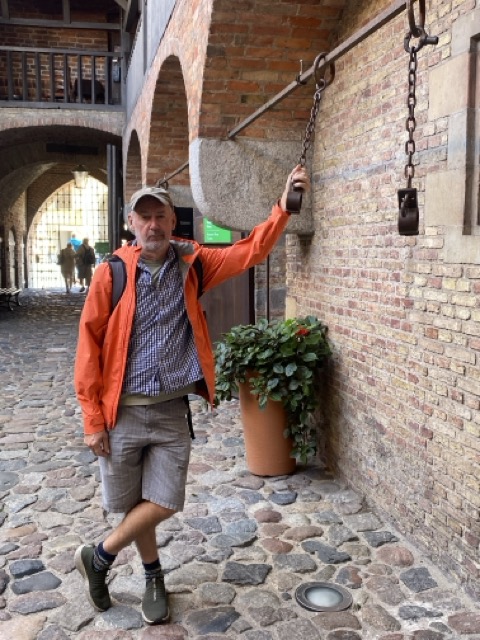
We walked through the prisoners museum at the old prison. Glenn was hanging around there.
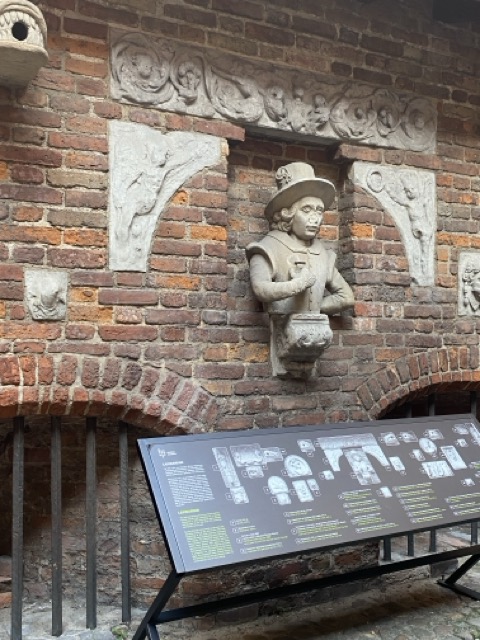
Our next stop was the amber museum. We got in free as it was Monday.
Before entering the main area there was a small exhibition on fake amber and how to tell the difference between fake version made from glass, other resins or plastics. Amber floats in salt water and glows in UV light a soft, milky-blue, blue-green, or bright yellow-green colour. Fake versions don’t do this.
It also feels warm to the touch and generates static electricity when rubbed.
We enjoyed finding out more about how amber was formed from tree resin many millions of years ago.
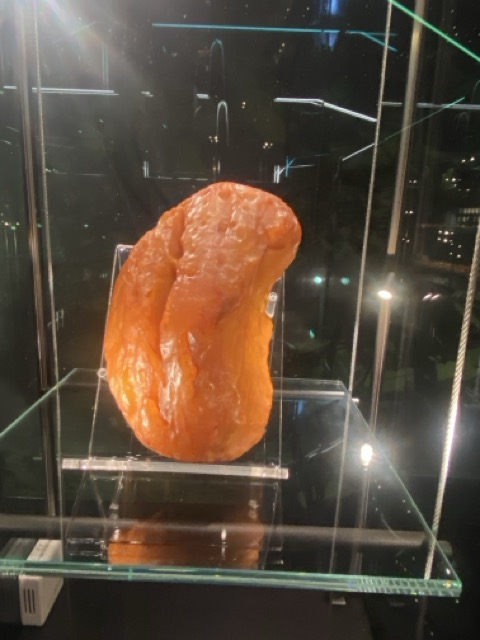
There were some massive pieces.
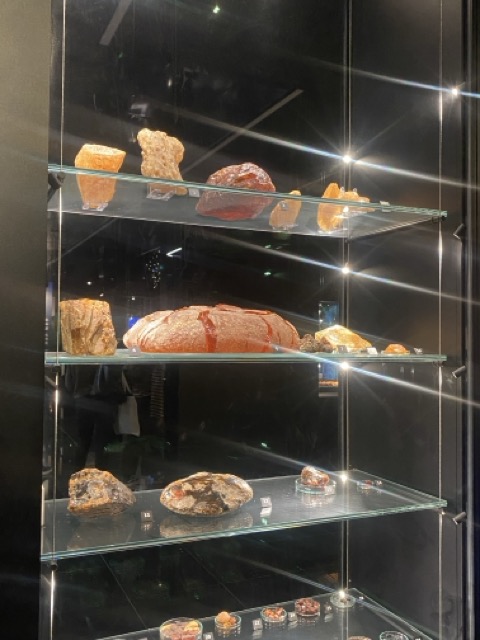
There are amber collectors working with nets along the beach to find amber.
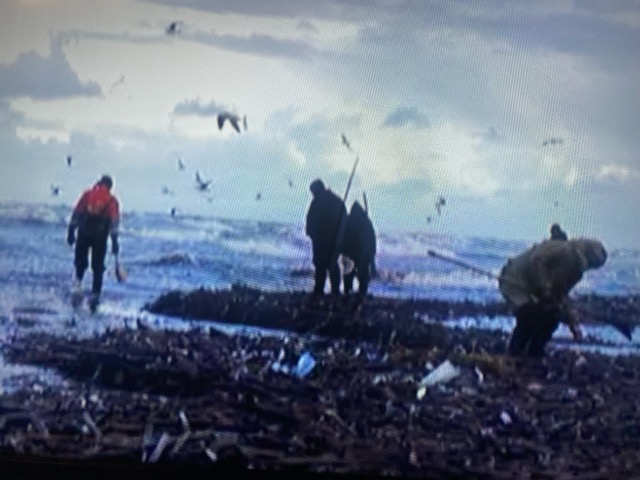
There are other people who blast water at the earth to break it up causing a lot of environmental damage. This has been banned in Poland but it’s still happening in Russia.
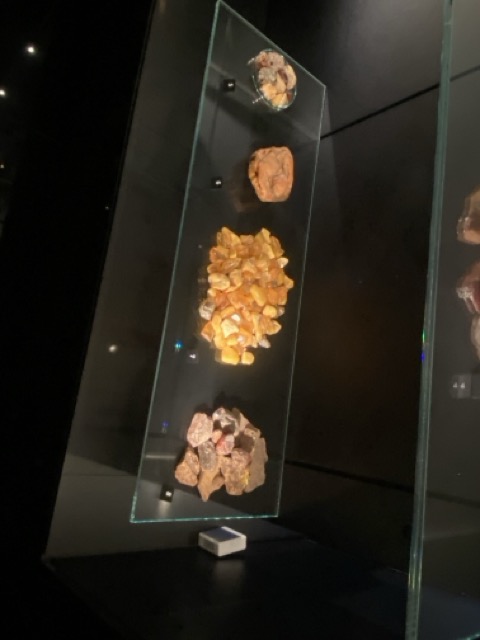
Here is what it looks like in the raw stone. It can come in many colours.
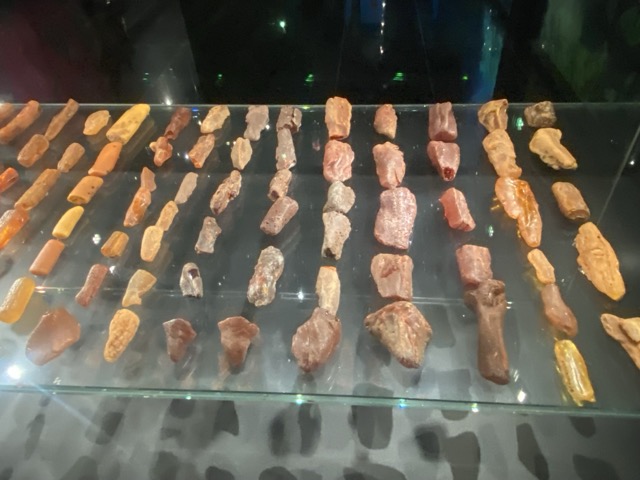
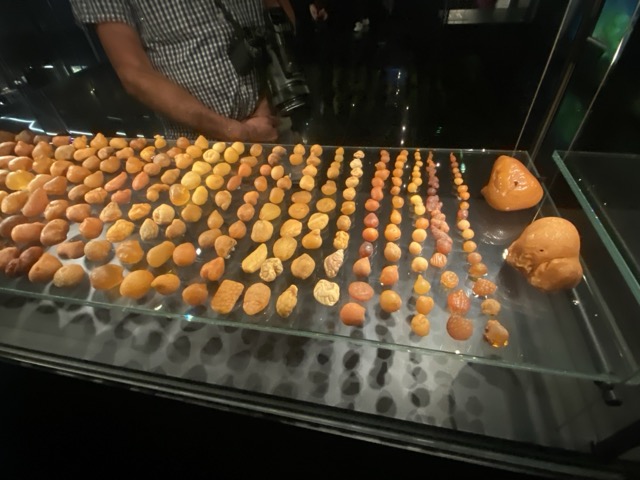
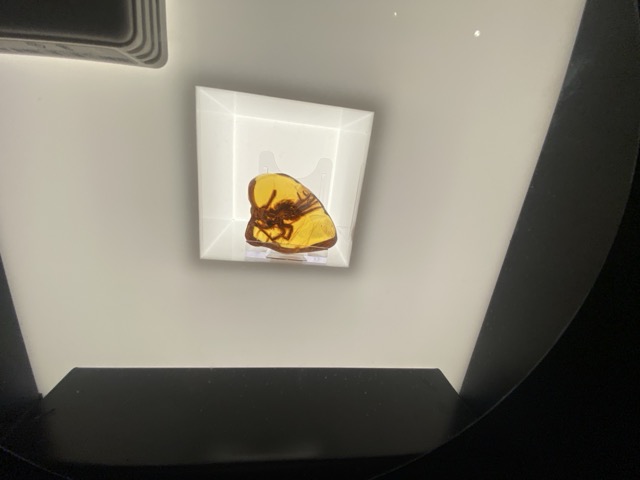
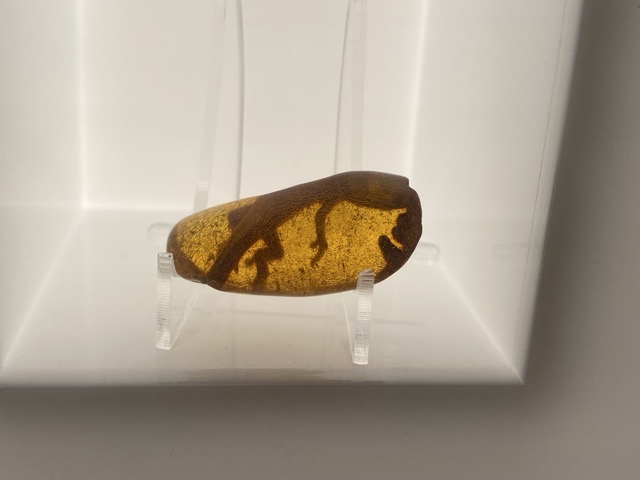
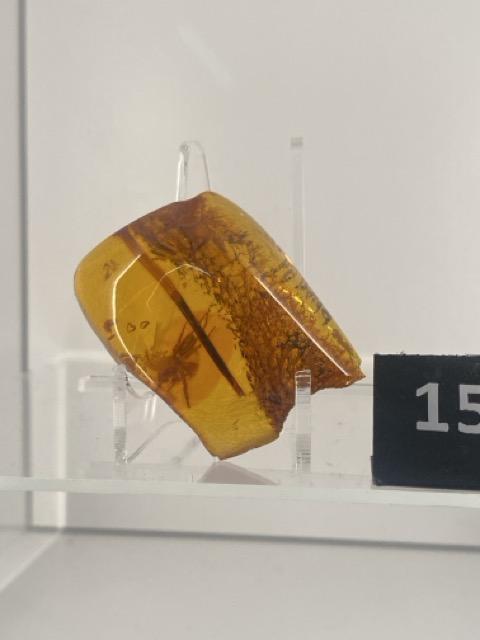
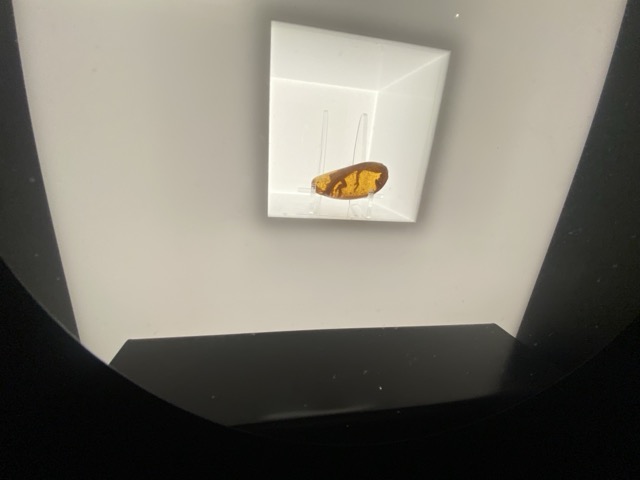
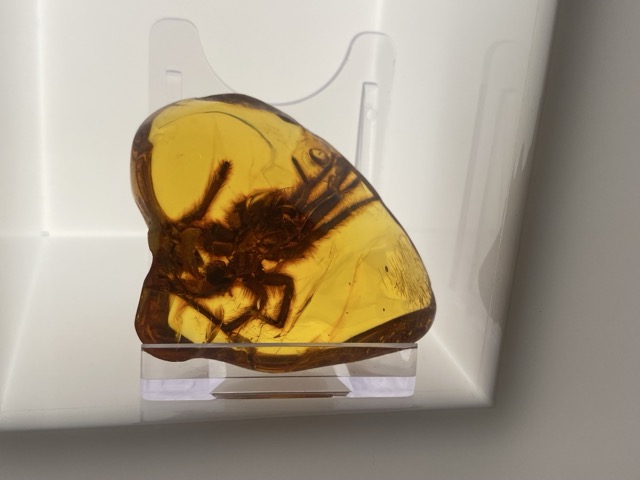
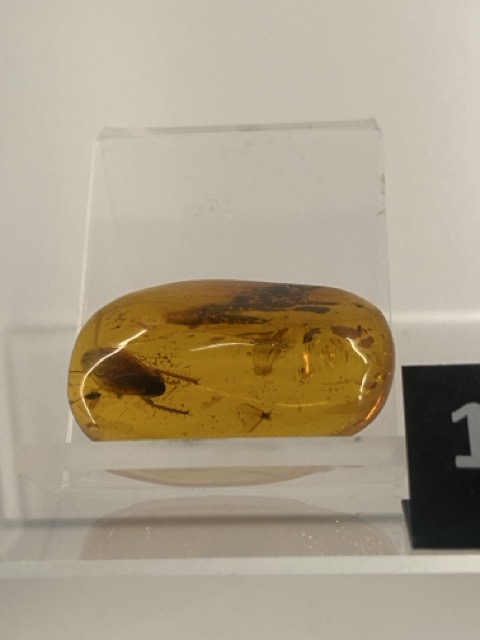
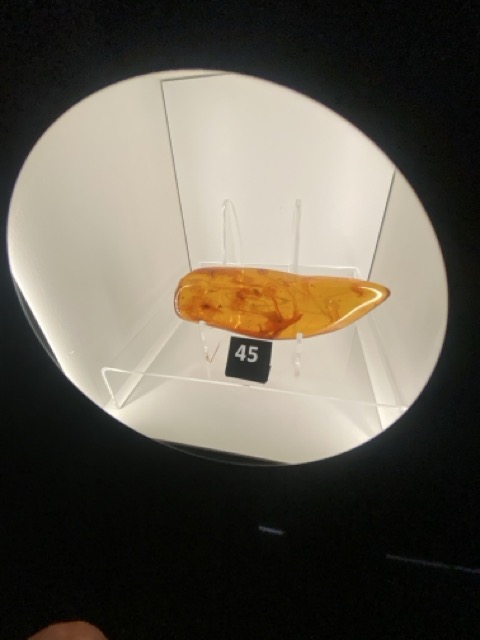
We saw examples of many different plants and insects trapped in amber.
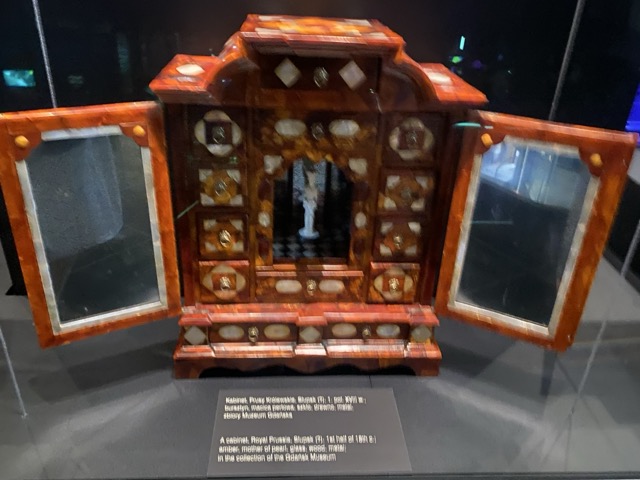
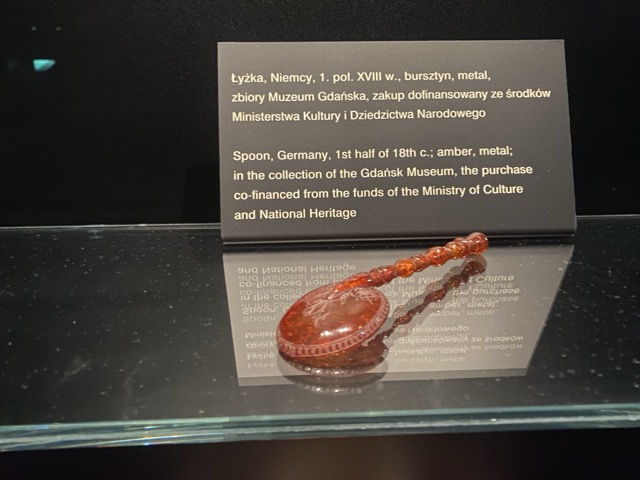
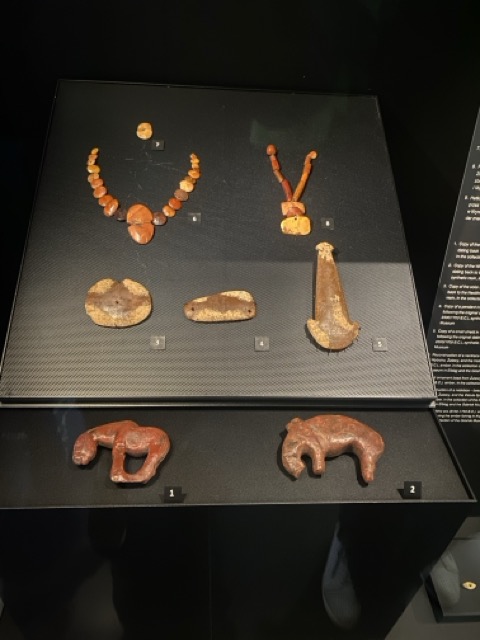
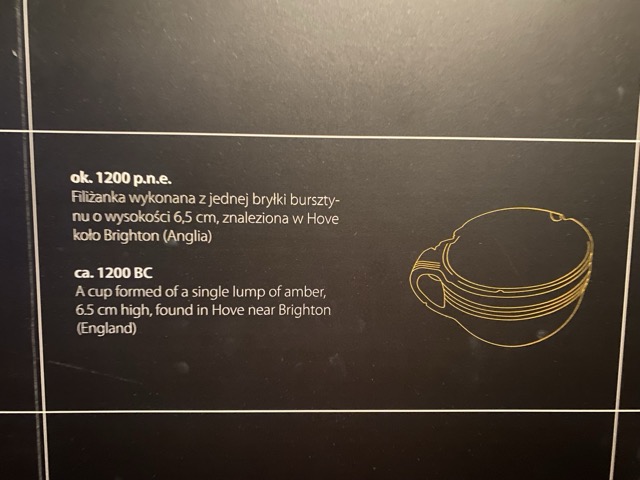
We then saw how it was worked, then examples of many things made from amber. Some are amazing.
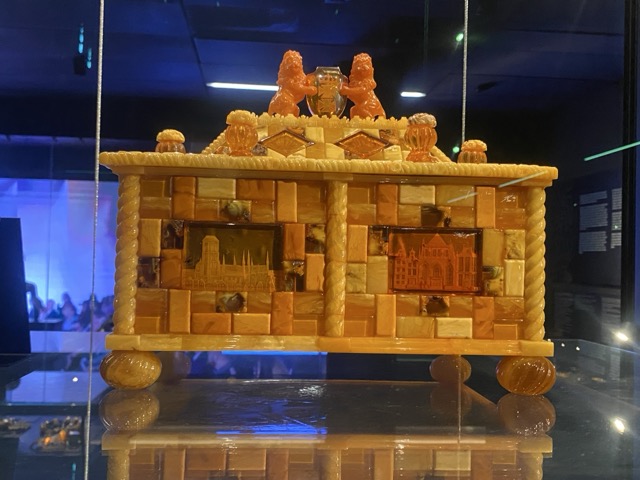
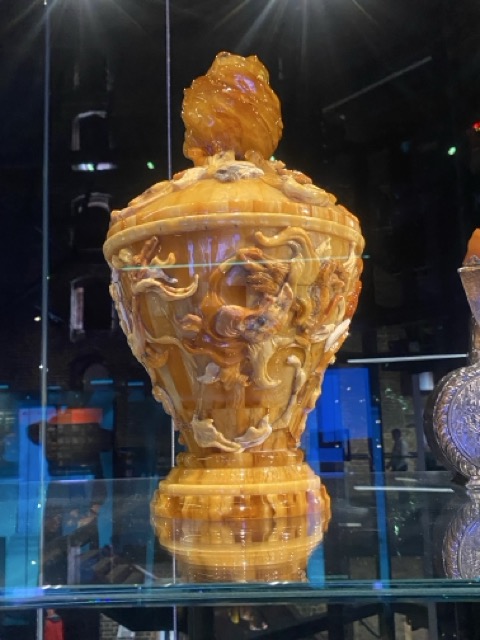
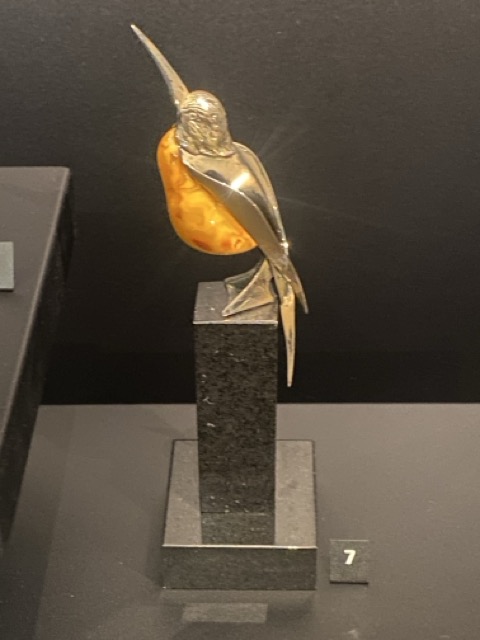
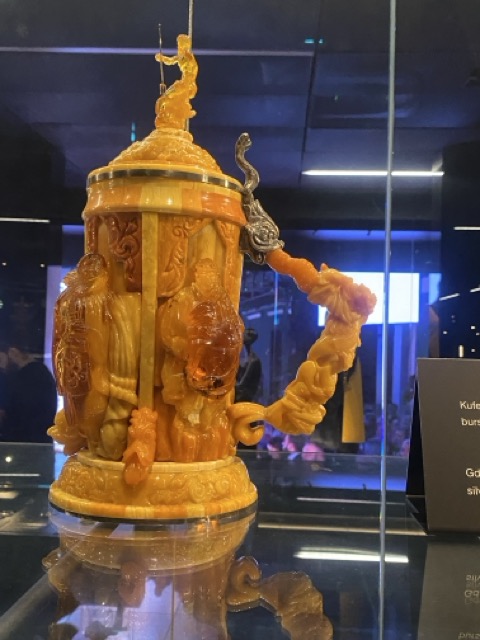
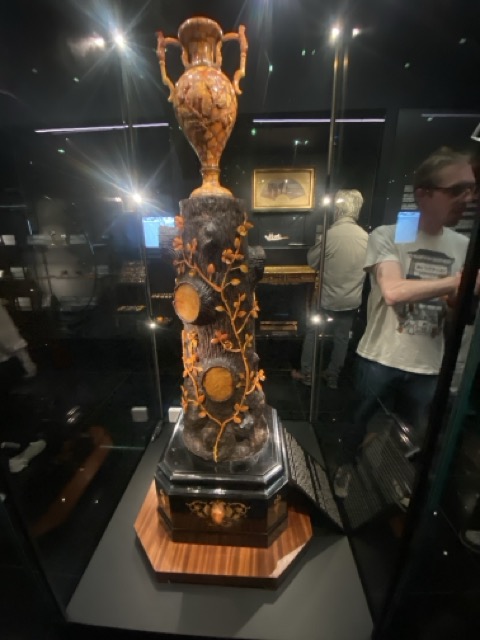
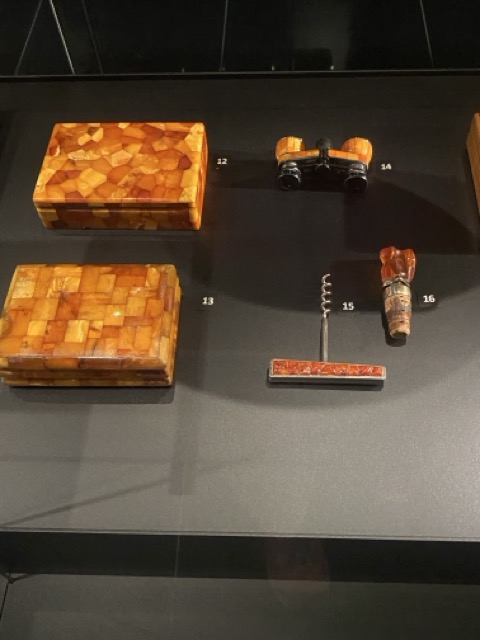
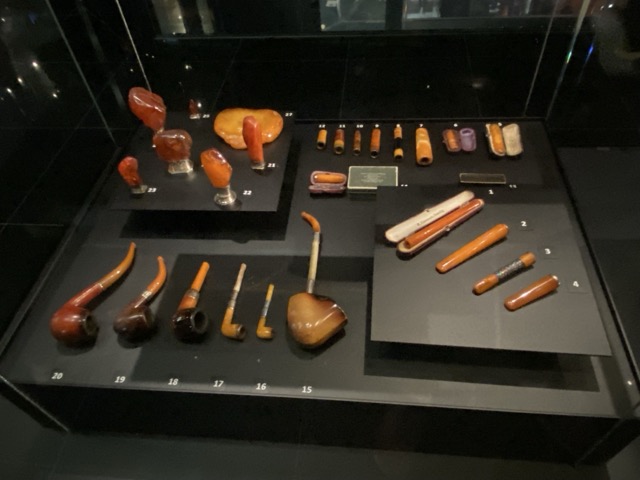
We bought a few things since it’s a reliable place to buy genuine amber.
We then went for a beer on the way back to the bus. We were soon home and had a quick cook up of chicken stroganoff.
Sean was feeling like he is coming down with something so we all had an early night.
Leave a Reply